
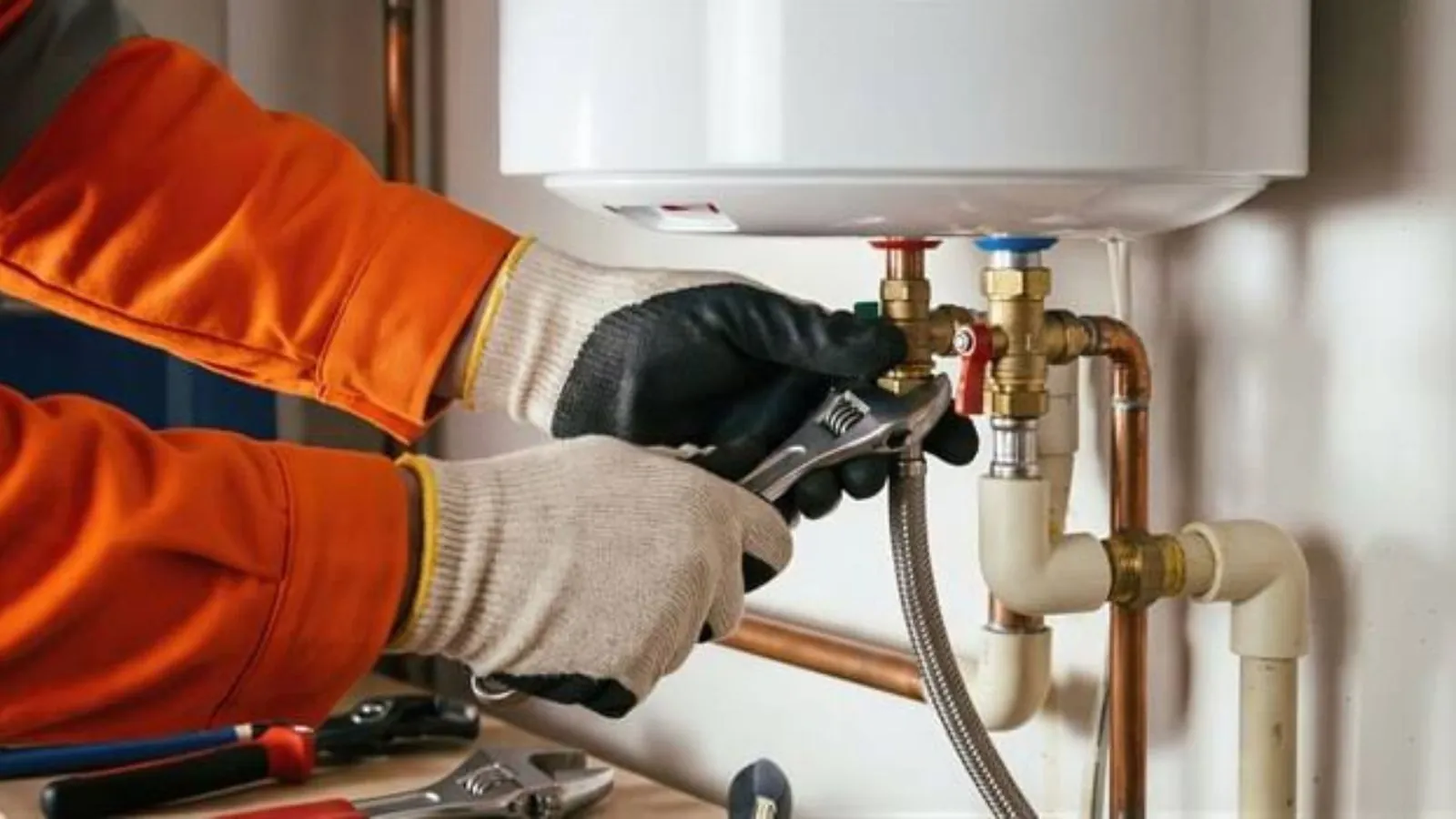
Emergency water heater leak cleanup in Iselin covers the water that escapes when a tank corrodes through, a fitting fails or the relief valve discharges. Residential tanks commonly hold 40 to 50 gallons, and a rupture can empty most of that across a utility room, basement or closet in minutes. The 24/7 line at (833) 521-1033 sends a crew to extract the water and dry the structure.
Start by shutting off the cold water supply valve on the tank, then turn off the power for an electric heater or the gas for a gas unit. If the heater is in a closet, check the wall behind it and the floor of the room next door, because water spreads sideways.
Water heater leak: first steps
Shut the supply
Turn the cold water inlet valve on top of the tank clockwise. This stops new water from refilling the tank.
Cut power or gas
Turn the breaker off for an electric unit only if the panel is dry, or the gas valve to off for a gas unit. Leave the area if you smell gas.
Do not touch hot water
Water from a tank can be scalding. Keep children and pets out of the area until it cools.
Photograph the tank
Note the model label, age and the spot of the leak. The photos help with insurance and for the plumber replacing the tank.
Where water heater water goes
Water from a tank usually runs to the low point and then under walls, into closets, across utility floors and through slab edges. In a basement, it can reach a finished room, a stored-box area or a furnace. In a first-floor closet, it can run under the flooring and wet the subfloor.
A moisture meter and thermal camera trace that path, because wet drywall behind a water heater may stay hidden for days. Once extraction is done, air movers and LGR dehumidifiers dry walls and floor edges while the crew checks the readings.
Cleanup versus replacement
A water heater leak involves two separate jobs. Replacing or repairing the tank is plumbing work and belongs to a licensed plumber. The cleanup is restoration work: extracting the water, drying the structure and repairing the damaged drywall, baseboards and flooring.
Keeping the two apart helps with an insurance claim, because the policy may treat the tank and the water damage differently. Ask your insurer how yours does.
| How the tank failed | What the water usually does | Typical restoration focus |
|---|---|---|
| Slow seep from a fitting | Wets the floor and wall base over days | Moisture mapping, dry the base, treat if wet long |
| Corroded tank wall | Releases the full tank at once | Heavy extraction and drying of adjacent rooms |
| Relief valve discharge | Wets the floor near the drain line | Extraction and spot drying |
| Burst connector or supply line | Runs until the supply is shut | Stop water, extract, dry walls and subfloor |
What changes the scope and price
How long it leaked
A slow weep found late can have soaked drywall and flooring much more than a fast rupture caught at once.
Location of the heater
A closet, basement or attic unit has different paths for water and different finishes nearby.
Rooms reached
Water that spread into adjacent rooms adds flooring and wall work.
Drying days
Framing and subfloors near the heater take time to dry, and readings decide the schedule.
Rebuild scope
Drywall, baseboard and flooring after drying are priced from what the assessment finds.
Scope and price are explained before work starts. Sudden water heater failures are often covered by homeowners policies for the water damage, while the tank itself may not be, and gradual leaks often are not. Read your policy or ask your insurer, and keep the plumber's invoice together with the restoration records.
Tank leaking or flooded? Shut the supply and call the 24/7 line.
Call (833) 521-1033Water heaters in Iselin basements, closets and attics
Units in finished basements and utility closets are common in the area's single-family homes and townhouses, and the finished space around them is where leaks do the most damage. Check the tank each season for rust at the base, damp insulation and a hot relief valve drain pipe, and note the manufacture date on the label.
If the leak ran into a nearby wall, the cleanup continues in wall and drywall water damage repair, and if it spread across a basement floor, see basement water damage cleanup. Heaters in slab homes can leak to the floor below, which sometimes overlaps with appliance leak water damage. We cover Fords and the Oak Tree Road area too.
Standards and sources
The water categories and drying terms on this page come from the ANSI/IICRC S500 standard for professional water damage restoration. Insurance and flood guidance comes from the New Jersey Department of Banking and Insurance and the FEMA Flood Map Service Center, and local flooding facts come from Woodbridge Township's floodplain documents.
Questions homeowners ask
Do you handle water heater leak emergencies at night or on weekends in Iselin?
Yes. The line at (833) 521-1033 is answered 24/7. Shut the cold supply and the power or gas first, then call for extraction and drying.
Do you replace water heaters?
No. Restoration covers the water damage. A licensed plumber replaces or repairs the heater, and the two jobs can be scheduled in either order.
Should I drain the tank myself?
A plumber can advise. For a leak, the priority is stopping the supply and power, then getting help with the water that has already escaped.
Will insurance cover water heater damage?
Often for sudden failures, but coverage varies by policy and cause. Ask your insurer about both the water damage and the tank.
How long does drying take after a tank leak?
Often several days, depending on how many rooms were reached and what the materials are. Moisture logs show when it is done.