
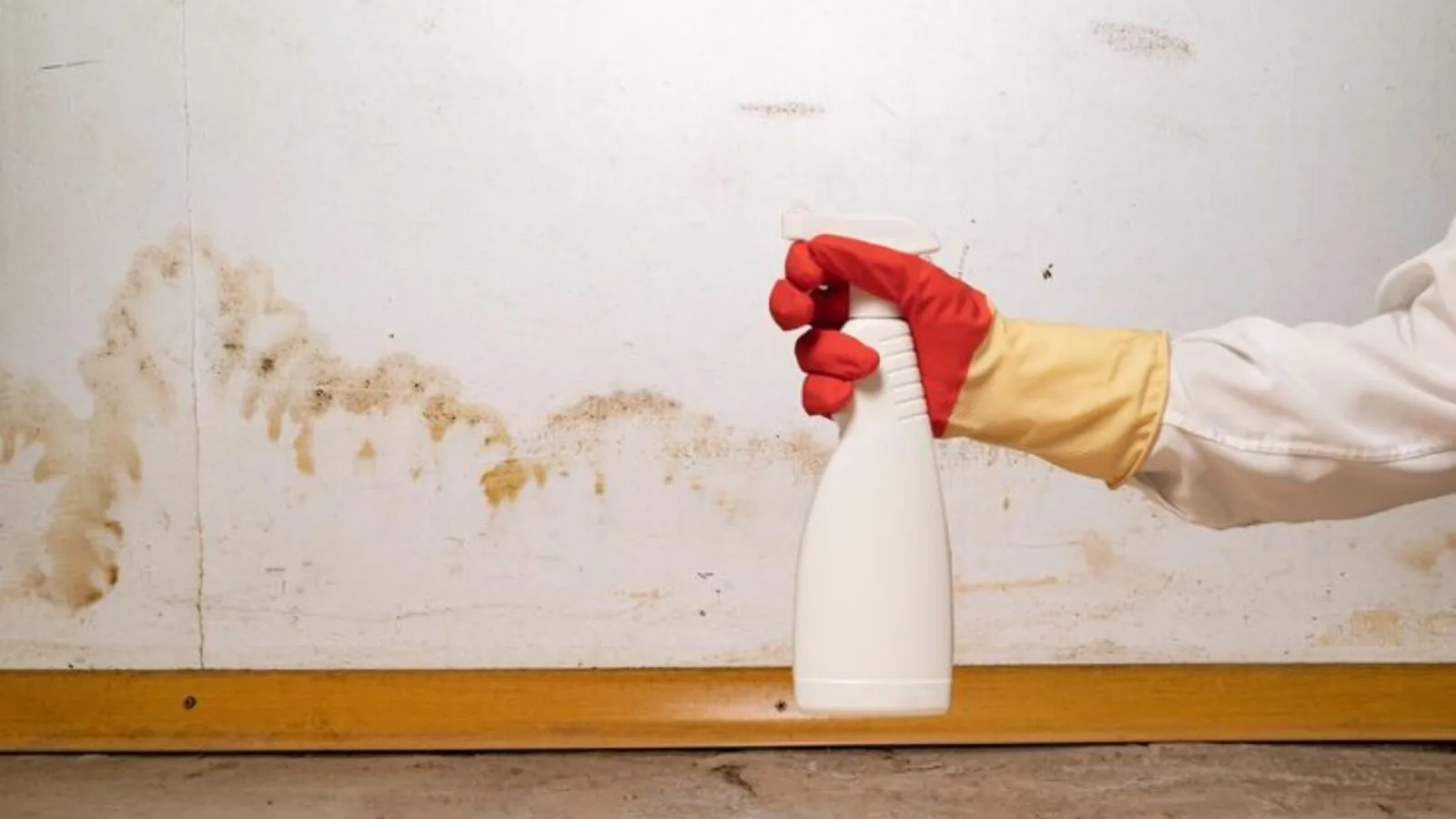
Musty smell, dark spots on drywall or a ceiling stain that keeps coming back?
Those are common reasons people look for mold help. A stale odor in a closet, fuzzy or dark patches on a wall, or a stain that returns after painting all point to moisture that was never fully dried. Call (833) 521-1033 to arrange an assessment.
Mold remediation in Iselin covers removing visible mold growth from building materials, fixing the moisture condition and checking the result. The U.S. Environmental Protection Agency says the key to mold control is moisture control, and that water-damaged areas should be cleaned and dried within 24 to 48 hours to prevent growth.
Why mold shows up after water damage
Mold spores are in the air indoors and outdoors. They need moisture and a food source such as drywall paper, wood or dust to grow. When materials stay wet, that combination is present. The EPA notes there is no practical way to eliminate all mold and mold spores from indoor environments, so the goal is to control moisture.
That is why the earlier work matters. Prompt extraction and structural drying are the strongest protection. Mold remediation is what follows when drying was late or the source kept running.
Fix the moisture
A leak, humidity or condensation problem has to be stopped, or the mold returns.
Contain the area
Work areas are sealed and kept under controlled airflow so spores are not spread to clean rooms.
Remove affected material
Porous materials with growth, such as drywall and insulation, are usually removed rather than cleaned.
Clean and dry
Surfaces that can be saved are cleaned, then dried to readings.
Mold testing and clearance
The EPA says that if you can see or smell mold, testing is usually not needed to decide what to do, since the response is to clean it up and fix the moisture. Testing has a place when a third party wants documentation, such as clearance after remediation.
Where testing or clearance is wanted, an independent assessor who is not the remediation contractor is the usual route, since it avoids a conflict of interest. The remediation crew provides the work, photos and moisture logs, and the assessor provides the report.
| Situation | Usual approach | Who typically handles it |
|---|---|---|
| Small visible area on a surface | Clean and dry, fix moisture | Homeowner or crew, per EPA guidance |
| Larger or hidden growth | Containment, removal and drying | Remediation crew |
| Documentation for sale or loan | Independent testing or clearance | Third-party assessor |
| Recurring stain with no visible mold | Find the moisture source first | Plumber, roofer or HVAC, then crew |
What changes the scope and price
Area affected
Larger growth means more containment and removal.
Materials involved
Drywall and insulation are removed while framing is cleaned.
Hidden moisture
Growth inside a wall means opening the wall to find it.
Testing
Independent assessment is a separate cost from the work.
Rebuild
Replacing removed drywall and finishes is priced from the assessment.
Scope and price are explained before work starts. Mold coverage varies by policy and cause, so read yours and ask your insurer. Keep records of when moisture was found and what was done.
Musty smell or dark spots? Call to assess the moisture and the damage.
Call (833) 521-1033Mold after water damage in Iselin homes
Humid New Jersey summers and basements near the South Branch Rahway River drainage make moisture control a seasonal task. Check lower levels, closets on exterior walls and the area around air handlers after heavy rain or AC use.
Common starting points include basement water damage, AC leak water damage and wall and drywall repair. We serve Woodbridge, Fords and Metuchen.
Standards and sources
The water categories and drying terms on this page come from the ANSI/IICRC S500 standard for professional water damage restoration. Insurance and flood guidance comes from the New Jersey Department of Banking and Insurance and the FEMA Flood Map Service Center, and local flooding facts come from Woodbridge Township's floodplain documents.
Questions homeowners ask
Do I need mold testing before remediation?
Not necessarily. The EPA says testing is usually not needed to decide what to do about visible mold. It can help when a third party wants documentation.
My buyer's lender wants a mold report for a home sale. Can you provide it?
The remediation crew documents the work, but a clearance report normally comes from an independent assessor. Ask the lender what form of documentation it accepts.
Can I clean mold with bleach?
Check EPA guidance. It generally advises fixing the moisture and cleaning with detergent and water, and not relying on a biocide alone.
Will mold come back?
It can if the moisture returns. Fixing the source and confirming dry readings reduces the chance.
Is mold covered by insurance?
It depends on the cause and the policy. Ask your insurer before work starts.