
Walls still damp, floors still cool or a musty smell days after the leak?
That usually means the surface dried but the material behind it did not. Drywall, subfloors, baseboards and wall cavities hold water long after a towel and a fan have made the room feel normal. A moisture meter, not touch, shows where it is. Call (833) 521-1033 to arrange a reading and a drying plan.
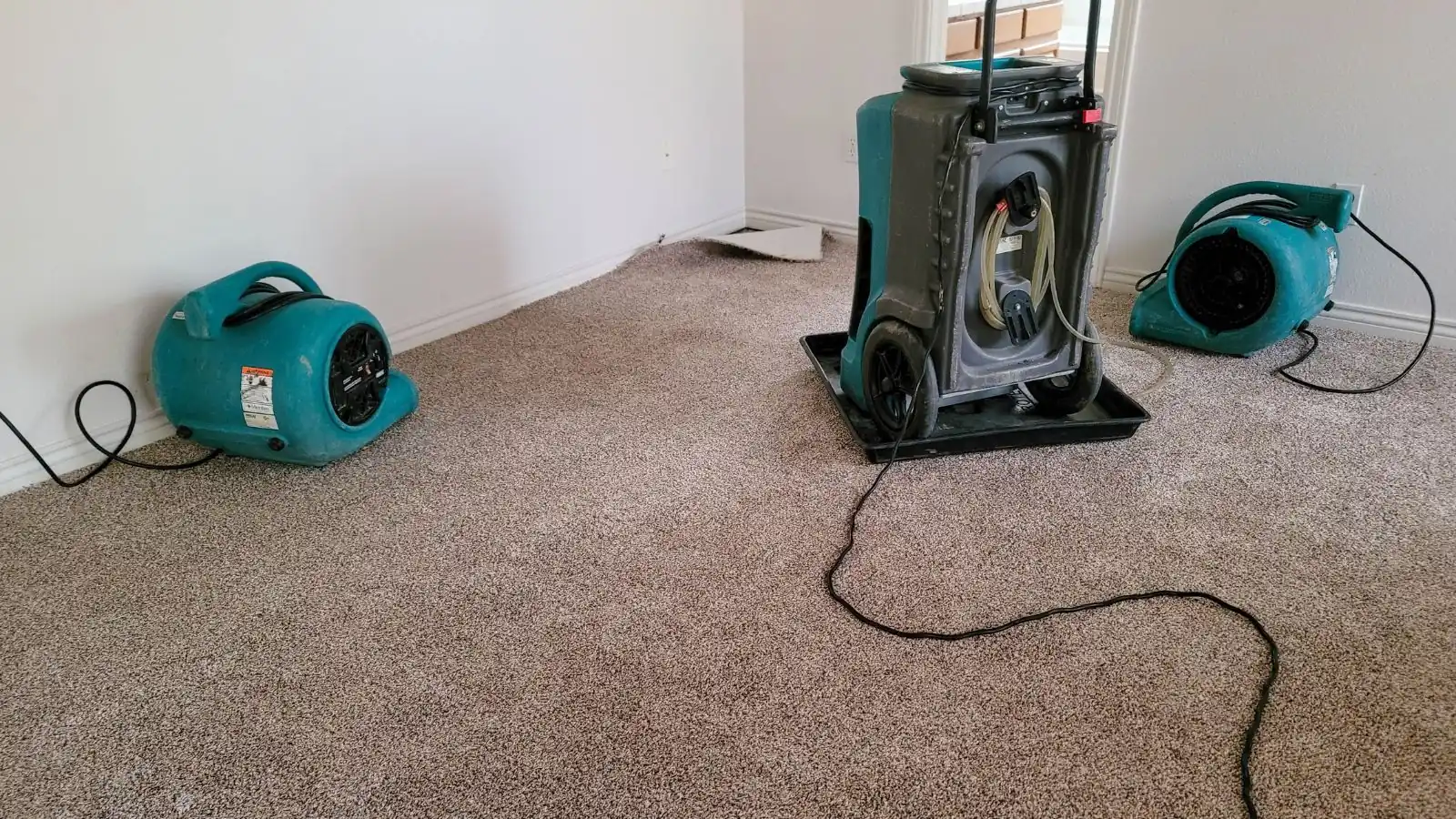
Structural drying and dehumidification in Iselin is the controlled removal of moisture from the building materials and air, using air movers, dehumidifiers and daily readings until the structure reaches dry values.
What to do while a structure is drying
- Keep doors and windows closed as the crew advises so dehumidifiers can work.
- Leave equipment running and do not unplug it to save power or noise.
- Keep children and pets away from cords and equipment.
- Tell the crew if you see new stains, smells or wet spots.
Water mitigation: why drying comes right after extraction
Water mitigation is the first stage of restoration, and it means stopping the damage from growing. That includes pulling out standing water, removing materials that cannot be saved and drying everything else. Drying is the step that decides whether materials are saved and whether mold becomes a concern.
Extraction is covered on the water extraction page. This page is about what comes after: getting the moisture out of walls, floors and the air.
How structural drying works
Measure first
Moisture meters and a thermal camera map wet areas and set the readings that define dry for each material.
Air movers
They push air across wet surfaces to speed evaporation from floors and wall bases.
LGR dehumidifiers
They pull the evaporated water out of the air so it does not settle on other surfaces.
Daily checks
Readings are taken each visit and equipment is moved or removed as areas dry.
Drying is a balance. Too little airflow leaves moisture trapped, and too much dry air too fast can warp wood. The crew sets equipment by room size and material, and closes the area so the dehumidifiers work on the wet space rather than the whole house.
A drying log records the date, readings and equipment for each visit. It shows when the work is done and helps with a claim.
| Material | How it dries | What affects the time |
|---|---|---|
| Drywall | Often dried in place if caught early | Water category and how long it was wet |
| Wood subfloor and framing | Air movers and dehumidifiers over days | Thickness and species |
| Concrete | Slow, with dry air | Thickness and moisture drive |
| Insulation | Often removed rather than dried | Type and saturation |
What changes the scope and price
Area and volume
Larger wet areas need more equipment and more days.
Material type
Dense materials like concrete and hardwood dry slowly.
Water category
Contaminated water changes what can be dried in place.
Equipment days
Duration depends on readings, not a fixed number.
Access
Wall cavities and under-floor spaces may need openings to dry properly.
Scope and price are explained before work starts. Drying records support an insurance claim, so ask for the daily log. The equipment is placed and operated by the crew and is not rented out to be set up on your own.
Damp walls or floors after a leak? Call for moisture readings.
Call (833) 521-1033Drying homes in a humid climate
Summers near the Raritan Valley are humid, which makes drying slower because the air already carries moisture. Dehumidifiers matter more in warm months, and closed doors and windows help the equipment work. In winter, heated indoor air is drier, but cold exterior walls can hold moisture.
Damage that began as a pipe failure is covered on burst pipe water damage, and wet basements on basement water damage cleanup. If drying was delayed, read about mold remediation. We also serve Metuchen and Woodbridge.
Questions homeowners ask
Do you rent out drying equipment?
No. The crew sets up, runs and removes the equipment as part of the drying service.
How long does structural drying take?
Often a few days, depending on materials, water category and readings. The log shows when it is done.
Can I just run fans and a dehumidifier myself?
That helps for a small, clean spill. For hidden or larger moisture, readings are needed to know when it is truly dry.
Why are the machines so loud?
Air movers and dehumidifiers run continuously to dry the structure. The noise is temporary.
When is the structure considered dry?
When readings reach the dry standard for each material, which is recorded in the log.