
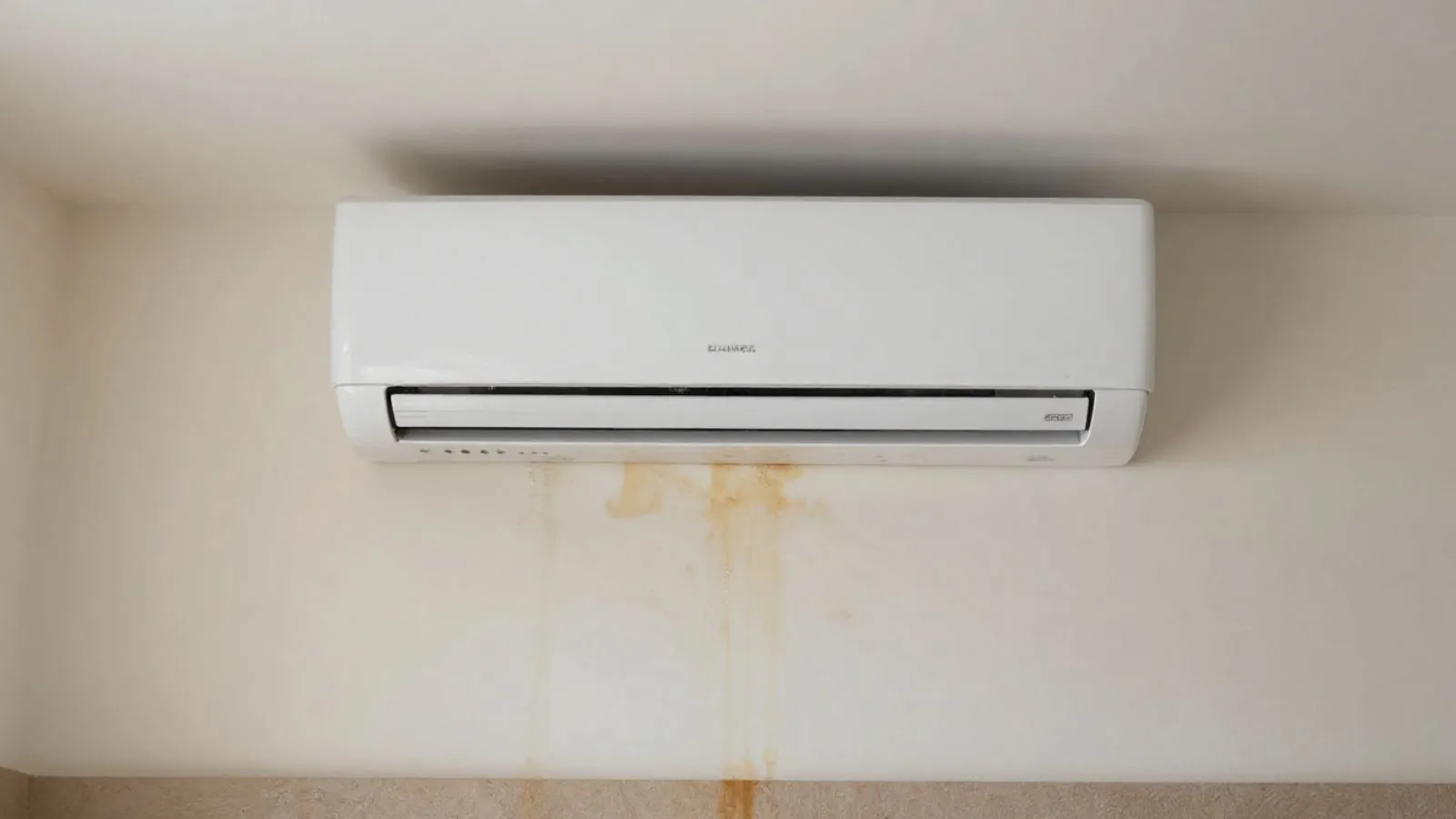
AC leak water damage repair in Iselin deals with the water that escapes from an air handler, evaporator coil, drain pan or condensate line. Cooling equipment pulls humidity out of the air, and that water must leave through a drain. When the drain clogs or the pan rusts, the water goes into the ceiling, the closet or the attic floor. Call (833) 521-1033 to arrange drying and repair.
Turn the system off at the thermostat so it stops producing water, and place a container under any drip. Do not keep running a unit that is leaking, because it can keep soaking insulation and drywall.
What to do first when an AC unit leaks
- Turn the system off at the thermostat so it stops making water.
- Place a container under any drip and move items away from the wet area.
- Do not touch a ceiling fixture that is wet, and call an electrician if one is dripping.
- Photograph the stain and the unit before anything is changed.
Ceiling stain or wet closet near the air handler?
Many AC leaks are found by their symptoms rather than the source. A brown ring on the ceiling under an attic unit, a damp closet floor beside the furnace or a musty smell near the return are common signs. These are the situations people search for when they wonder why a ceiling is stained on a dry day.
Stain on a dry day
A ceiling stain with no rain often points to a condensate line or pan above. It can grow whenever the system runs.
Damp closet floor
Water pooling around an indoor air handler usually means a clogged line or a failed pan.
Musty smell near vents
Damp insulation or drywall near the unit can smell stale before any stain shows.
Overflow switch tripped
A unit that shuts off by itself may have a float switch that caught a full pan. Check the line.
How AC leak damage is handled
The HVAC technician fixes the equipment: clearing the line, replacing a pan or sealing a fitting. The restoration crew handles the water damage: finding wet insulation and drywall, drying the cavity and making repairs. Doing the dry-out before the ceiling is closed matters, because insulation can stay wet for a long time.
A thermal camera and moisture meter map the wet area. Wet insulation is removed, the framing is dried, and the readings are logged until the materials are dry.
| Source | What goes wrong | What the water reaches |
|---|---|---|
| Clogged condensate line | Algae or debris blocks the drain | Pan overflows into ceiling or floor |
| Rusted drain pan | Pan cracks and leaks through | Ceiling below, attic insulation |
| Frozen evaporator coil | Ice melts and exceeds the pan | Floor around the air handler |
| Disconnected drain fitting | Line separates from the pan | Wall or ceiling near the line |
What changes the scope and price
How long it dripped
Weeks of seepage soak insulation and drywall far more than one overflow.
Unit location
Attic, closet or basement units reach different materials and have different access.
Insulation
Wet insulation often has to come out and be replaced after drying.
Drywall and finish
Stained or soft drywall is cut out, and the rebuild is priced from what is found.
Drying time
Framing near the unit takes days, and readings show when it is done.
Scope and price are explained before work starts. Sudden AC overflow damage may be covered by homeowners policies, while gradual leaks often are not, so ask your insurer. Keep the HVAC invoice with the restoration records.
Ceiling stain near the air handler? Turn the unit off and call us.
Call (833) 521-1033AC leaks in Iselin homes
Humid New Jersey summers keep cooling equipment running for months, which gives a clogged line plenty of time to overflow. Many Iselin townhouses and condos place the air handler in a closet or attic, so a drip often lands on a ceiling or inside a wall. Schedule a line flush each spring with your HVAC contractor.
Damage that has spread into the ceiling is covered on ceiling water damage repair, and wall damage is on wall and drywall repair. If the area stayed damp, read about mold remediation. Crews also work in the Metropark area.
Standards and sources
The water categories and drying terms on this page come from the ANSI/IICRC S500 standard for professional water damage restoration. Insurance and flood guidance comes from the New Jersey Department of Banking and Insurance and the FEMA Flood Map Service Center, and local flooding facts come from Woodbridge Township's floodplain documents.
Questions homeowners ask
Why is my ceiling stained when it has not rained?
A stain on a dry day often comes from a pipe, a bathroom above or an AC condensate line or pan. A moisture meter and thermal camera trace which one.
Can I keep running the AC if it leaks?
It is better not to. A leaking unit can soak more insulation and drywall each time it runs, so turn it off until the line is cleared.
Who fixes the AC and who dries the ceiling?
An HVAC contractor repairs the equipment. A restoration crew dries and repairs the water damage. They can work in either order.
Is a stained ceiling from an AC leak covered by insurance?
Sudden overflows may be covered, while slow leaks often are not. Ask your insurer about your policy.
Does a wet ceiling always get mold?
Not always, but damp materials left for days can support it. Drying promptly lowers the risk.