
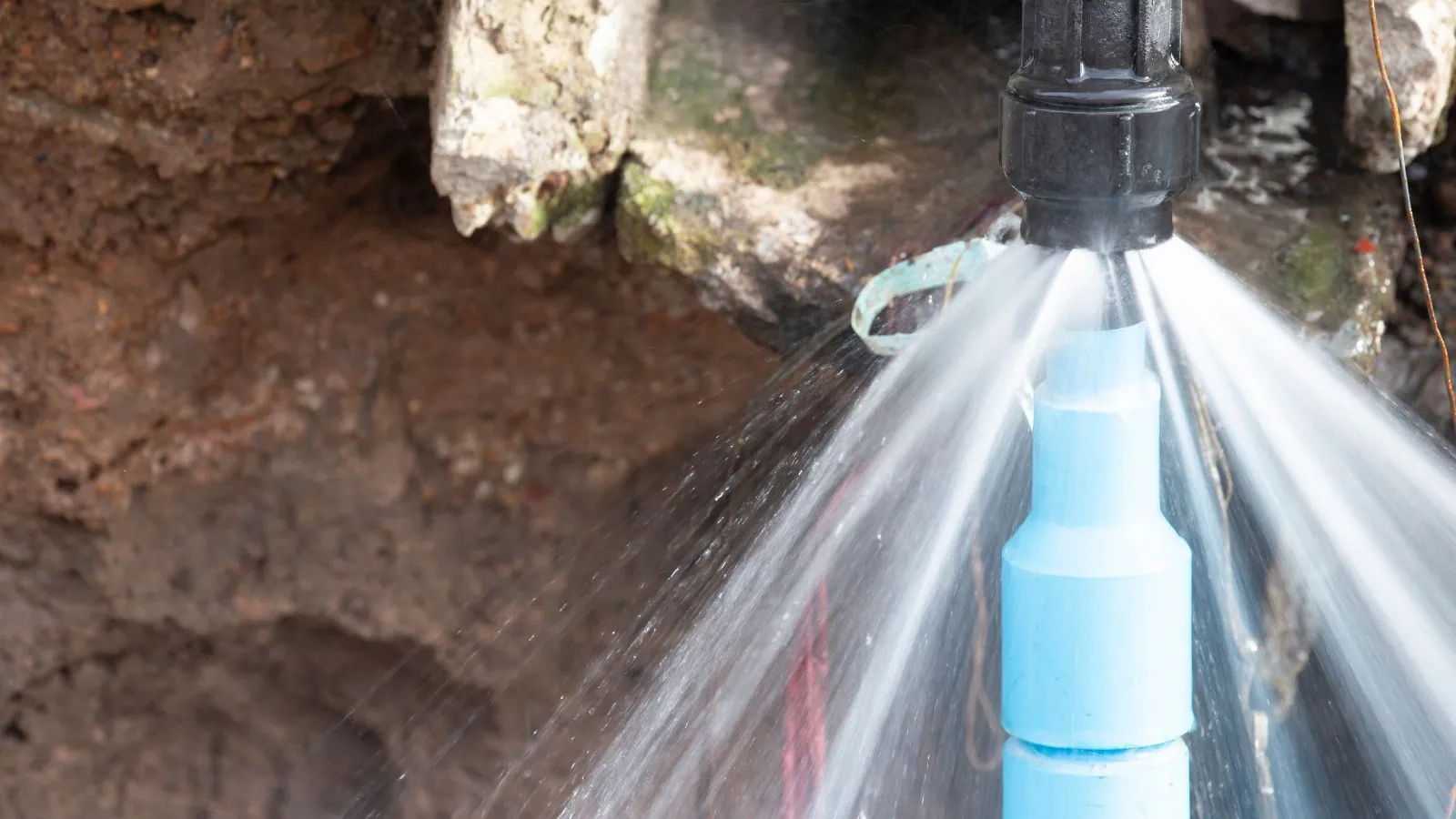
Emergency burst pipe water damage in Iselin is a race against the supply line, which keeps pushing water for as long as the valve is open. The first move is the main shut-off, usually near the water meter or where the line enters the basement. Once the flow is stopped, the line at (833) 521-1033 is answered 24/7 and a crew handles extraction, drying and the damaged materials.
A pipe under a sink, inside a wall or above a ceiling can all fail the same way, and the water often travels along framing before it shows. If you hear running water but see none, or find a ceiling stain growing, treat it as an active burst and shut the main.
Burst pipe: what to do in the first ten minutes
Close the main valve
Turn the main shut-off clockwise until the flow stops. Open a low faucet to drain the line and ease the pressure.
Protect the electrics
If water is falling through a ceiling light or over outlets, stay away. Cut power at the panel only if you can reach it dry.
Catch and lift
Place buckets under active drips, roll back rugs and lift small items. Do not walk through a ceiling that is bulging with water.
Document it
Photograph the failed section of pipe and the wet areas before anything is moved. Keep the broken piece if you can.
Why a burst pipe does more damage than a slow leak
Supply lines run under household pressure, so a split pipe sprays or pours instead of dripping. That volume saturates insulation and drywall in minutes, finds the low point and can bring a ceiling down below the break. A pinhole leak behind a wall can wet the same materials over weeks, but a burst does it before the next meal.
Water from a clean supply line starts as Category 1, the least contaminated class under the ANSI/IICRC S500 standard. It can move to Category 2 after it has sat on materials for a day or more, which is why speed matters even when the source is fresh.
What the crew does after the water is stopped
Extraction removes pooled water, and a moisture meter and thermal camera trace the wet path through walls, floors and ceilings below the break. Wet insulation and saturated drywall are opened up so air can reach the cavity, while air movers and LGR dehumidifiers pull the moisture out of the structure.
Moisture readings are logged each visit until the materials reach their dry standard. Only then does the repair phase, new drywall, trim and paint, make sense. Plumbing repair of the failed pipe itself is a plumber's job, so have one on call and keep the repair separate from the restoration.
| Where the pipe failed | Typical damage path | First priority |
|---|---|---|
| Under a kitchen or bath sink | Cabinet base, flooring, wall base | Extract, pull the base of the cabinet and dry behind it |
| Inside a wall | Wall cavity, insulation, adjacent rooms | Open the cavity to reach the wet insulation |
| Above a ceiling or in an attic | Ceiling drywall, light fixtures, floors below | Relieve trapped water and keep power off to wet fixtures |
| In a basement or utility area | Floor, stored items, lower walls | Extract and lift contents, then dry the framing |
What changes the scope and price
Time the water ran
A line caught in minutes is a smaller job than one that ran overnight through two floors.
Rooms and floors reached
Water that traveled to a level below the break adds ceilings, walls and flooring to the scope.
Materials involved
Hardwood, laminate, carpet pad and plaster respond differently, and some can be dried in place.
Drying days
Equipment stays until moisture readings reach the dry standard, so wet framing means more days.
Rebuild scope
Drywall, insulation, flooring and paint after drying are priced from what the assessment finds.
Scope and price are explained before work starts. Sudden and accidental pipe bursts are often covered by homeowners policies, while long-term seepage often is not, so ask your insurer what yours includes and keep the photos and moisture logs together.
Pipe still running or ceiling bulging? Call the 24/7 line now.
Call (833) 521-1033Burst pipes and older plumbing in Iselin homes
The 2020 census counted 6,994 housing units in Iselin, spread across single-family streets, townhouses and condominium communities. Older copper, galvanized and cast iron lines fail differently from newer plastic supply lines, so it helps to learn where your main shut-off sits before you need it.
Test the valve once a year so it turns freely, and tag it for everyone in the house. A burst under a kitchen sink often continues into the next room, so see kitchen water damage for cabinets, and wall and drywall repair for what follows once the area is dry. In cold weather, burst lines usually trace back to frozen pipes. We also serve Fords and the Metropark area.
Questions homeowners ask
Do you handle burst pipe emergencies at night or on weekends in Iselin?
Yes, the line at (833) 521-1033 is answered 24/7. Shut off the main first, then call, and the crew arranges extraction and drying for the affected rooms.
Where is my main water shut-off?
It is usually where the service line enters the house, often in a basement or utility room near the meter. If you cannot find it, the water utility can tell you where it typically sits for your home type.
Does a burst pipe always need drywall removal?
No. If the wall stayed wet only briefly and readings are low, it can sometimes be dried in place. Saturated insulation or drywall that has softened is usually opened up.
Will you fix the pipe too?
Restoration covers the water damage. The broken pipe itself needs a plumber, and keeping that repair separate avoids confusion over what the insurer is paying for.
How do I document a burst for my insurer?
Photograph the failed pipe and every wet room before cleanup, keep receipts for emergency steps, and keep the drying logs from the crew. Report the loss to your insurer promptly.