
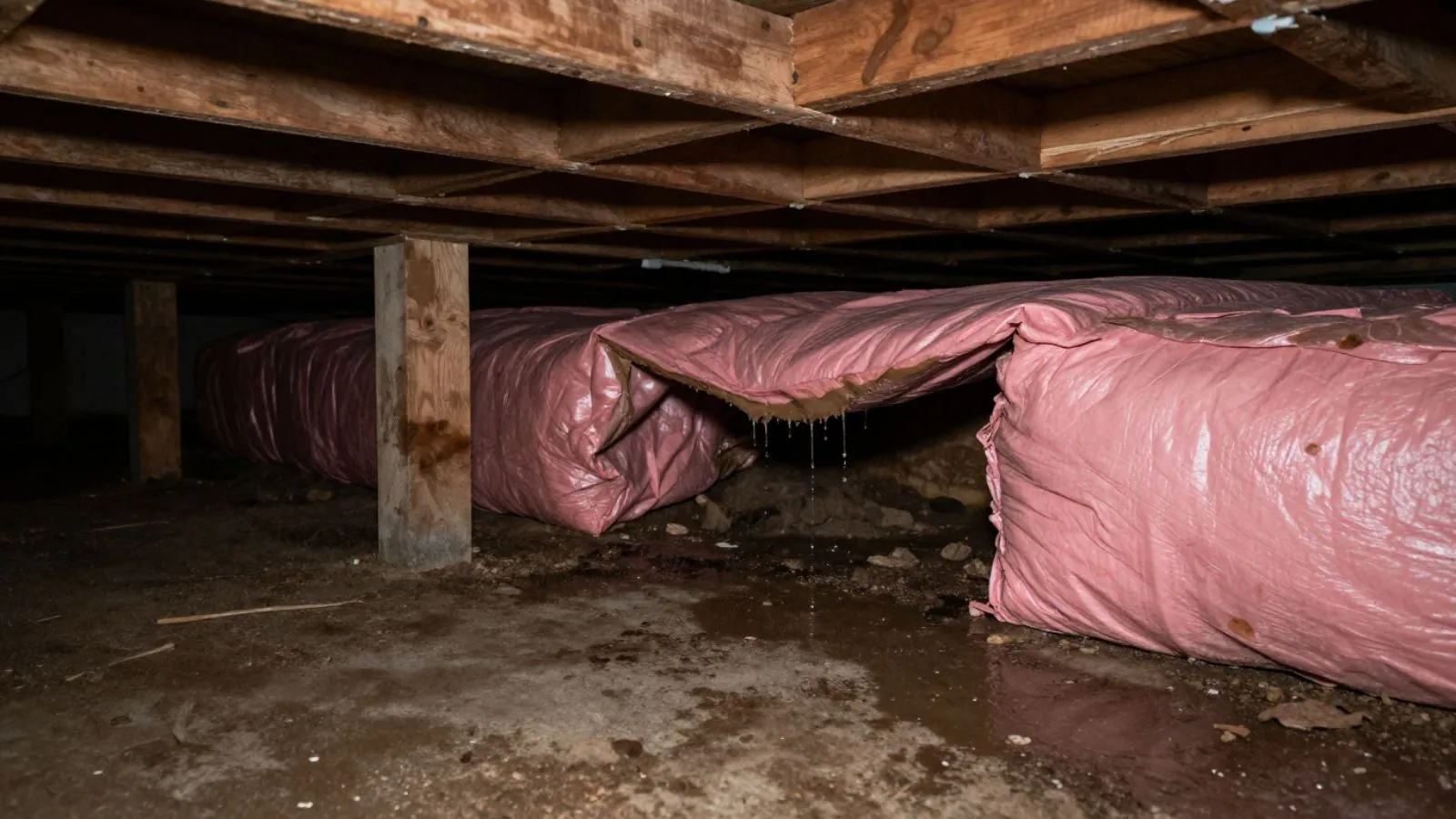
Crawl space water damage cleanup in Iselin covers standing water, soaked insulation and damp framing in the shallow space under a house. A crawl space is easy to ignore, but water there reaches floor joists and subflooring and can change the humidity of the rooms above. Call (833) 521-1033 to arrange pumping, removal and drying.
Do not crawl into a space with standing water if wiring or ductwork is wet. The space can have tight access, low clearance and contaminated water. A crew with the right equipment and protective gear should handle it.
What to do before the crew arrives
- Do not enter a crawl space with standing water if wiring or ductwork is wet.
- Shut off the water supply if a plumbing line is the source.
- Keep children and pets away from the access hatch.
- Photograph the water, the insulation and the entry point from outside the space.
What water in a crawl space does
Water under a floor soaks fiberglass insulation, which then sags and holds moisture against the subfloor. It raises humidity, wets the wood framing and, over time, can add to musty smells in the living space. Ducts and vapor barriers can be affected too.
Because the space is hidden, the first sign is often cold or damp floors, a musty smell or insulation that has fallen. A moisture meter on the joists tells you how far the wetness reaches.
Standing water
Pumped out first, with the source identified so it does not refill.
Wet insulation
Soaked insulation holds water and is usually removed and replaced after drying.
Framing and subfloor
Joists and subfloor are measured and dried, not just checked by eye.
Vapor barrier
A torn or wet ground cover is part of the assessment and is repaired when needed.
How crawl space cleanup works
Crews pump out the water, remove insulation that cannot be dried and clean the surfaces. Air movers and dehumidifiers dry the space, with equipment placed for the tight access. Readings on the joists and subfloor track progress until they reach dry values.
Water that keeps entering is a drainage or grading problem outside the scope of restoration. A contractor or plumber addresses the source while the crew handles the damage.
| Where the water comes from | What it often indicates | What the crew does |
|---|---|---|
| Heavy rain and runoff | Drainage or grading issue | Pump out, dry, advise on the source |
| Plumbing leak above | Supply or drain line leak | Dry after the plumber repairs |
| High groundwater | Seasonal water table rise | Pump out, dry, monitor |
| Condensation | Humid air on cold surfaces | Dry, check vapor barrier and ventilation |
What changes the scope and price
Access
A tight or low entry slows work and affects the equipment that can be used.
Water depth and category
Rain, groundwater and sewage are handled differently.
Insulation
Amount of insulation to remove and replace.
Framing and subfloor
Wet joists and subfloor take longer to dry.
Drying days
Readings decide when equipment can come out.
Scope and price are explained before work starts. Groundwater and surface water entering a crawl space are often excluded by homeowners policies, while a plumbing leak may be covered. Ask your insurer and keep photos.
Water or damp insulation under the house? Call to arrange cleanup.
Call (833) 521-1033Crawl spaces in Iselin area homes
Crawl spaces appear in some older and split-level houses, while many homes in the area have full basements. Iselin sits in the South Branch Rahway River drainage, so heavy rain is a real possibility, and the township's floodplain study names flooding in the Colonia and Iselin sections. We do not claim a frequency of crawl space flooding here.
Standing water at a lower level is covered on basement water damage cleanup, and the drying process is explained on structural drying. See also mold remediation if the area stayed damp. We work in Woodbridge and Fords too.
Standards and sources
The water categories and drying terms on this page come from the ANSI/IICRC S500 standard for professional water damage restoration. Insurance and flood guidance comes from the New Jersey Department of Banking and Insurance and the FEMA Flood Map Service Center, and local flooding facts come from Woodbridge Township's floodplain documents.
Questions homeowners ask
Can I pump out the crawl space myself?
For a small amount of clean water, a pump may do. If wiring is wet, the water may be contaminated or access is tight, call a crew.
Does wet insulation have to be replaced?
Usually. Soaked fiberglass sags, holds water and is hard to dry in place.
Will a vapor barrier solve it?
A ground cover limits moisture from the soil but does not stop a leak or a flooded space.
Does homeowners insurance cover crawl space water?
It depends on the cause. Plumbing leaks may be covered, while groundwater and surface water often are not.
How do I know the crawl space is dry?
Moisture readings on joists and subfloor are logged until they reach dry values.