
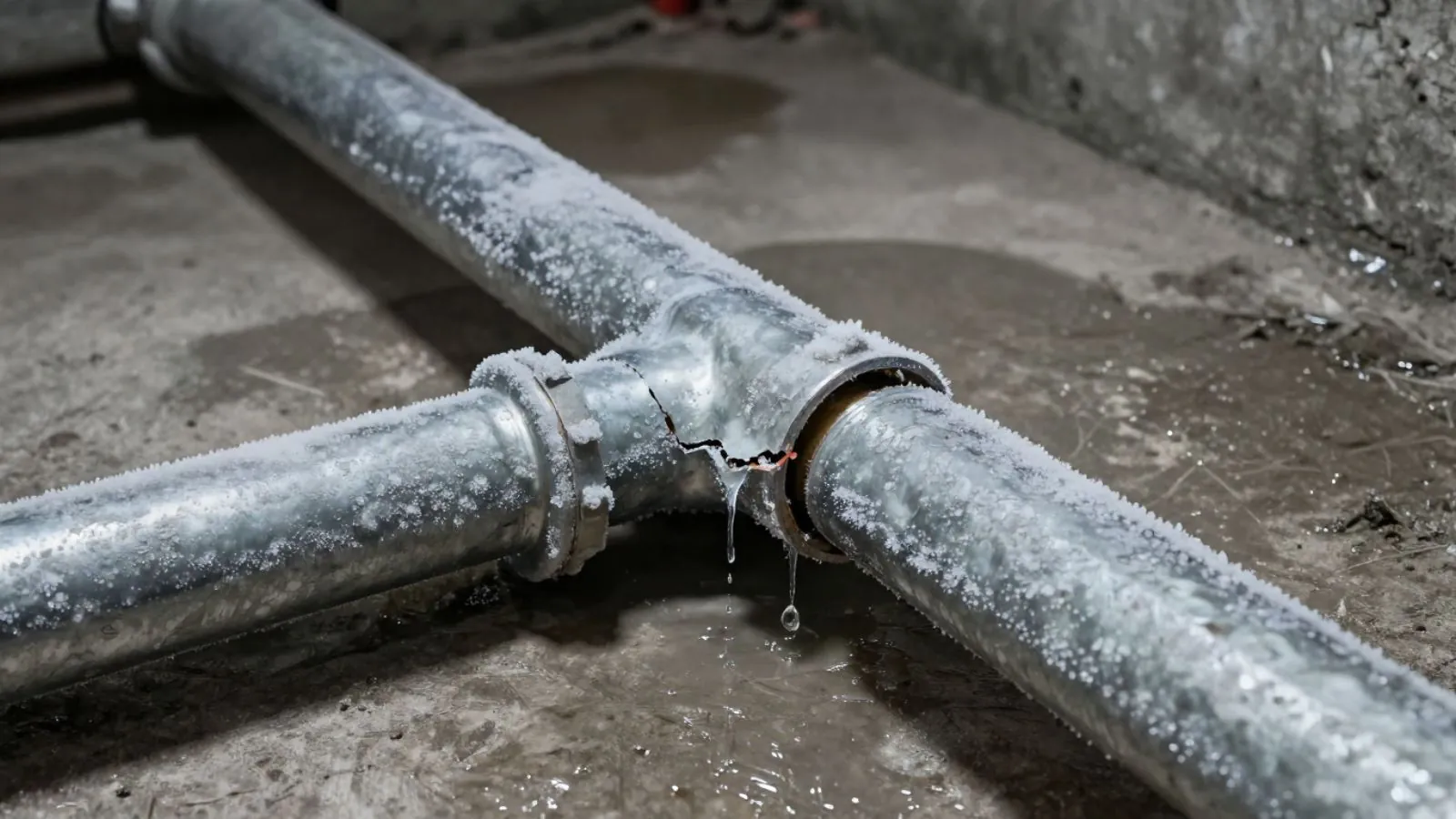
Emergency frozen pipe water damage in Iselin usually begins after the pipe has thawed, because ice acts like a plug and a split in the pipe stays hidden until water flows again. When the line warms and the pressure returns, water pours out of the crack and into walls, floors or ceilings. The 24/7 line at (833) 521-1033 is answered through cold nights and weekends.
If a faucet gives only a trickle or nothing at all in freezing weather, a section of pipe is likely frozen. Keep the faucet open, find the main shut-off and check exposed lines in garages, crawl spaces and exterior walls for frost, bulges or a visible split.
A frozen pipe is an emergency before it leaks
A pipe that has frozen solid is a warning that the next hours matter. Water expands when it freezes, and the pressure can split the pipe wall a short distance from the ice blockage. The leak only shows up when the ice melts.
Open the nearest faucet
A slightly open tap lets melting water drain from the line instead of building pressure against a split.
Know the main valve
Locate the main shut-off before you thaw anything, so you can close it the moment a split appears.
Thaw gently and in the open
Warm air from a hair dryer on an exposed pipe works. Never use an open flame, and do not thaw a pipe inside a wall with heat.
Call before it runs
If you cannot reach the frozen section or see a crack, call the line and shut the main off. A plumber repairs the pipe, and the crew handles water.
Where frozen pipes usually split
Splits tend to occur in the sections farthest from heat: lines in unheated garages, along exterior walls, in crawl spaces and above uninsulated ceilings. Water supply lines to outdoor spigots are also exposed when the hose is left attached.
That is why thaw damage often appears in a wall cavity or a ceiling below an attic run, not in the room where the pipe froze. Moisture mapping with a meter and thermal camera traces the path before any drywall is opened.
| Where the pipe froze | What thaw water usually reaches | How it is handled |
|---|---|---|
| Exterior wall | Wall cavity, baseboards, floor edge | Open the base of the wall and dry with air movers |
| Attic or ceiling run | Insulation, ceiling drywall, rooms below | Remove wet insulation and drywall, then dehumidify |
| Garage or utility room | Slab edge, stored items, shared walls | Extract, lift contents, dry wall base |
| Crawl space | Joists, insulation, subfloor | Remove wet insulation and dry the framing |
Thaw damage: what the crew does
The first step is the same as for any pipe break: stop the water, extract what pooled and measure what is wet. Frozen-pipe jobs often involve insulation, because the lines that freeze tend to sit in insulated cavities that hold water like a sponge. Wet insulation is removed, and the cavity is dried with air movers and an LGR dehumidifier.
The pipe repair is a plumber's task. The restoration crew works to the ANSI/IICRC S500 drying standard, logs moisture each visit and tells you when the structure is dry enough to close up.
What changes the scope and price
Time the split ran
A crack found within minutes of thawing is smaller than one that ran while the house was empty.
Location in the structure
Exterior walls and attic runs often involve insulation and drywall, which adds removal and rebuild.
Number of splits
Freeze events often split more than one section, and each leak path adds to the scope.
Drying days
Insulated cavities hold moisture, so readings guide how long equipment stays.
Rebuild scope
Insulation, drywall, trim and paint are priced after drying, from what the assessment shows.
Scope and price are explained before work starts. Frozen pipe bursts are often treated as sudden and accidental by homeowners policies, though conditions such as keeping heat on in a vacant home can matter, so read your policy or ask your insurer before you assume.
Pipe split after a thaw? Shut the main, then call the 24/7 line.
Call (833) 521-1033Freeze risk in central New Jersey
Cold snaps are normal in Middlesex County winters, and the National Weather Service forecast for your ZIP, 08830, is the right place to check overnight lows before a freeze. Rather than quoting a local average, the useful habit is to treat any night forecast below freezing as a day to open cabinet doors on exterior walls and let a faucet drip.
If a pipe has already split, burst pipe water damage covers the cleanup that follows, and crawl space water damage covers lines that froze below the floor. Frozen lines near an exterior wall often leave drywall to deal with, which is the subject of wall and drywall repair. Crews also respond in Woodbridge.
Questions homeowners ask
Do you handle frozen pipe emergencies at night or on weekends in Iselin?
Yes. The line at (833) 521-1033 is answered 24/7, including during cold snaps. If a pipe has split, shut the main and call, and the crew will arrange extraction and drying.
Should I thaw a frozen pipe myself?
Gentle warm air on an exposed section is reasonable. Do not use a flame or heat inside a wall, and keep the faucet open so melting water can drain.
How do I know if a frozen pipe has already cracked?
Look for a bulge, a visible split, a wet spot on the ceiling or wall, or the sound of running water after the pipe thaws. If in doubt, shut the main.
Can frozen pipe damage cause mold?
Mold needs moisture, and wet insulation or drywall that stays damp is where it can start. Drying the cavity quickly is the main way to avoid that.
Does insurance cover frozen pipe damage?
Often, when the damage is sudden and accidental, but policies differ. Ask your insurer what yours requires, such as maintaining heat in the home.