
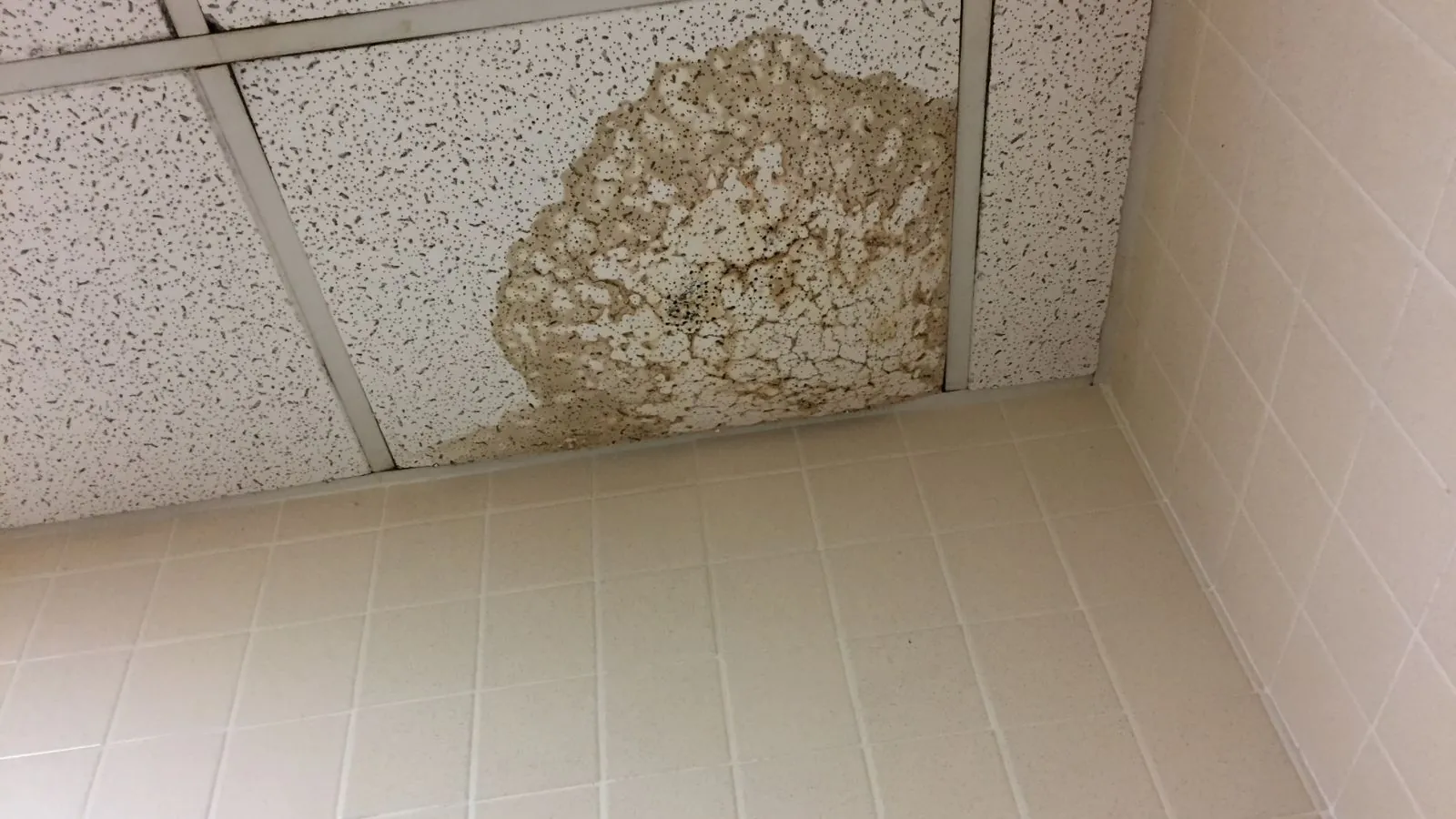
A brown ring on a ceiling, a soft corner of floor, a stain behind a toilet. People find these when they are buying a house, cleaning a closet or repainting, and they ask the same question: is it old or is it still happening? The answer matters, because an old stain can be left alone while an active leak keeps damaging the house.
Appearance alone cannot date water damage reliably. This guide explains what the visible signs can suggest and what measurement can tell you.
Signs that point to an older, dry stain
- A stain with a clear, hard edge that has not changed in size over weeks.
- Material that is dry to the touch and reads dry on a moisture meter.
- Paint that has been applied over the stain without it returning.
- No musty smell and no new discoloration nearby.
Signs that suggest an active or recent leak
- A stain that is growing, with a soft or damp edge.
- Material that feels cool, damp or swollen.
- Rings that multiply as the stain dries and rewets over time.
- A musty smell, blistering paint or crumbling drywall.
- Moisture readings above the dry reference reading for that material.
| What you see | May suggest | How to confirm |
|---|---|---|
| Single tan ring, hard edge, dry | Past event that dried | Moisture meter reading |
| Multiple rings | Repeated wetting over time | Find and fix the source |
| Damp or soft material | Active or recent water | Meter and thermal camera |
| Stain returns after painting | Moisture still present | Trace the source above or behind |
| Musty smell, nothing visible | Hidden moisture | Moisture mapping |
Why a stain can be misleading
A stain marks where water traveled, not where it came from. Water can run along framing and show up feet away from the source. A dry stain can sit above a damp cavity, and a damp-looking area can be condensation. A moisture meter and thermal camera look at the material itself, which is why measurement beats guessing.
How a crew checks
The crew takes moisture readings across the stain and the area around it, compares them with a dry reference reading and looks at the thermal pattern. It checks above and behind the stain for the likely source, such as a fixture, a supply line or an air handler. If readings are dry, the stain may be old. If they are elevated, the source needs to be found and the area dried.
That visit gives you a reading and a reason, which is what you need if you are deciding whether to repair, negotiate or report.
Buying or selling a house with a stain
If you are a buyer, ask the seller what the stain is and request records of any repairs. Moisture readings during the inspection are more useful than an opinion about the stain. If you are a seller, keep invoices and drying records, since a documented fix is more persuasive than a fresh coat of paint.
A short at-home routine
- Photograph the stain with a coin or ruler for scale and note the date.
- Check it again in a week and after the next rain or shower use.
- Press gently on the area to check for softness.
- Note any smell, especially after the HVAC runs.
- Look above and behind the stain for pipes, vents and roof edges.
A stain that stays the same size, stays dry and has no smell is probably not active. A stain that changes or feels damp deserves a reading.
Iselin, NJ: what local sources say
The 2020 census counted 6,994 housing units in Iselin, and the community includes a range of detached homes, townhouses and condominium buildings. In a condo, a stain on your ceiling may come from the unit above, so the question of old or new includes who owns the source.
Woodbridge Township's floodplain documents record flooding from Hurricane Irene in August 2011. A stain on a lower wall of an older home may be from a storm years ago or from a leak last month, and readings are the way to tell. Source types used here are census data and township floodplain documents.
Want to know if a stain is still wet? Call for moisture readings.
Call (833) 521-1033What to do if it is active
Find and stop the source, photograph the area and have it dried. A wet wall or ceiling left alone can lead to weakened drywall and growth. The service pages on ceiling water damage and wall and drywall water damage explain what repair involves once the area is dry.
Crews also serve Metuchen and Woodbridge.
Standards and sources
The water categories and drying terms on this page come from the ANSI/IICRC S500 standard for professional water damage restoration. Insurance and flood guidance comes from the New Jersey Department of Banking and Insurance and the FEMA Flood Map Service Center, and local flooding facts come from Woodbridge Township's floodplain documents.
Questions homeowners ask
Can a moisture meter tell how old a stain is?
No. It tells whether the material is wet now. Age is inferred from other signs and records.
Is a ring stain always old?
Not always. Rings form as water dries and rewets, so a ring can be recent. Readings and the source decide.
Should I paint over an old stain?
Only if the material is dry and the source is fixed. Use a stain-blocking primer if appropriate, and watch for returns.
The stain is on my Iselin condo ceiling. Who is responsible?
It depends on the source. Tell the association or owner, photograph it and ask your insurer how the loss would be treated.
When should I call a crew?
If readings are elevated, the stain is growing or there is a musty smell, call for an assessment.