
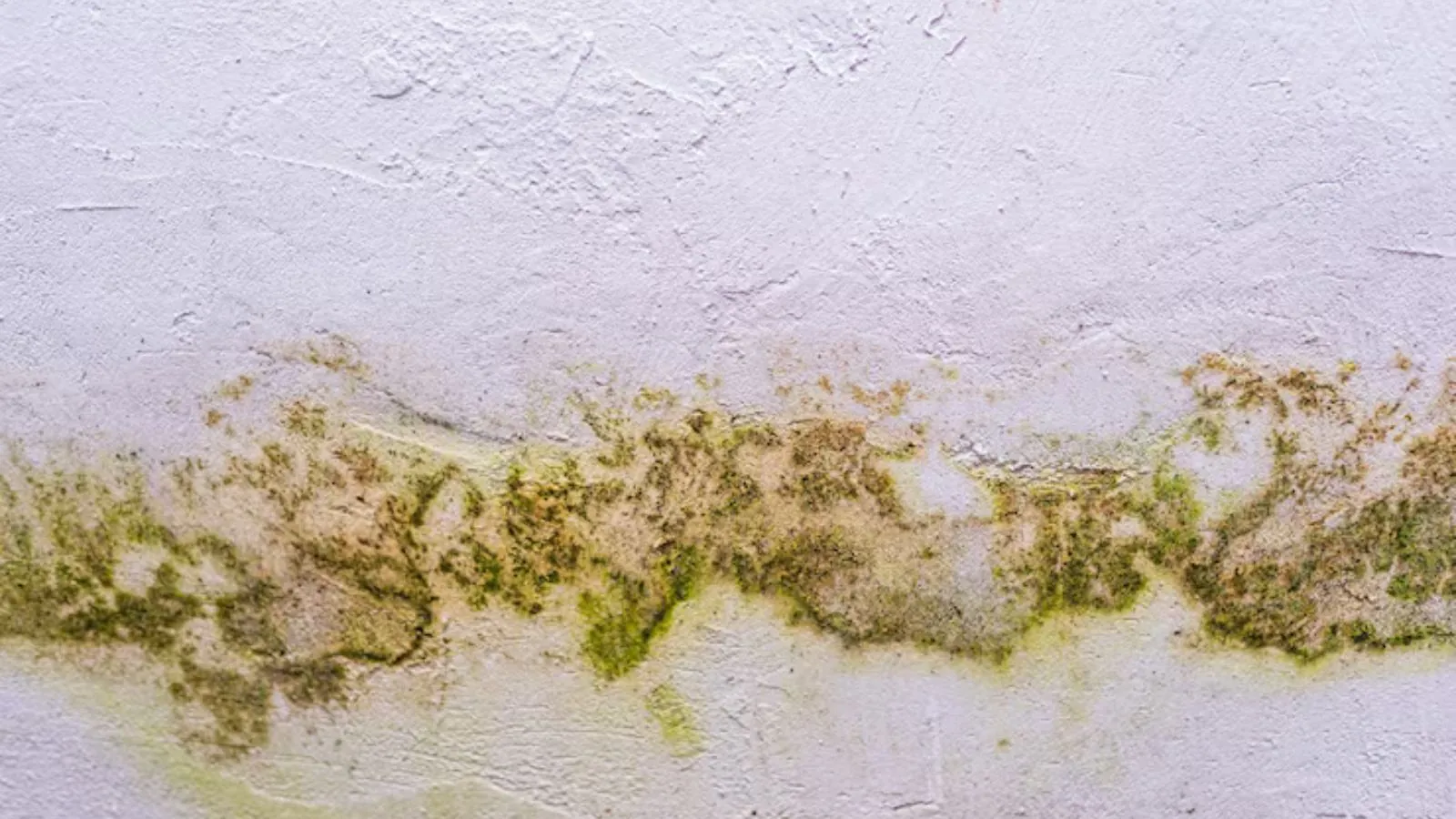
In everyday talk, mildew is the light, flat growth on a shower wall or a window sill, and mold is the thicker, darker growth people worry about in a basement. Scientists and the U.S. Environmental Protection Agency use the words differently. The EPA notes that the term mildew is often used for certain types of mold, so both are fungi that need moisture to grow.
That matters because it changes the question. You do not need to decide which one it is. You need to decide why it is wet.
How people use the two words
| Often called mildew | Often called mold | |
|---|---|---|
| Appearance | Flat, powdery or downy, white, gray or yellow | Fuzzy, slimy or raised, many colors |
| Typical places | Showers, window sills, damp fabric | Basements, drywall, wood, insulation |
| Typical cause | Surface humidity and condensation | Leaks, floods and long-term dampness |
| Usual response | Clean the surface, improve ventilation | Clean or remove, fix the water problem |
These labels are a rough guide, not a diagnosis. A patch that looks like mildew can sit on a wet wall, and a dark patch can be surface growth that wipes away. Only a look at the moisture tells you which situation you are in.
Why the difference does not change the first step
The EPA's guidance is the same whatever you call it. Find and fix the moisture, clean hard surfaces with detergent and water and dry them. Remove porous materials that cannot be cleaned. You do not need to name the organism to decide that.
Where each shows up in a house
Bathrooms collect mildew-type growth from steam and poor ventilation. Window sills collect it from condensation. Basements, closets on cold exterior walls and areas near a past leak collect the heavier growth, because moisture lingers there. Look at the pattern. A line on a wall at the height of a past water line, or a patch under a window, points to the source.
If the patch keeps coming back after cleaning, the moisture is still there.
Simple ways to keep surfaces dry
- Run the bath fan during and after showers, and vent it outdoors.
- Wipe condensation from window sills in cold weather.
- Keep indoor humidity controlled, especially in summer.
- Fix drips and dry spills quickly.
- Leave a little space between furniture and exterior walls.
Cleaning a small surface patch safely
For a small patch on a hard surface, such as grout, tile or a sealed sill, scrub with detergent and water, rinse and dry. Wear gloves and a mask, and open a window. Never mix bleach with ammonia or other cleaners, since the fumes are dangerous. If you decide to use a commercial product, follow the label and ventilate.
After cleaning, look at why it was wet. A fan that does not vent outdoors, a window that sweats in winter or a slow drip behind a fixture is usually the reason.
When a patch is more than a patch
Growth that covers a large area, returns quickly after cleaning, sits on drywall or insulation or comes with a musty smell and soft material points to a moisture problem inside the wall or floor. At that point the question is no longer what to call it. The question is where the water is coming from and how to dry it.
A moisture reading settles it, and the answer determines whether the job is a cleaning task or a removal task.
Health questions
People react to mold and mildew differently, and some are more sensitive than others. If anyone in the home has asthma, allergies or another condition, ask a doctor how it applies to them. Do not rely on a contractor or a web page for medical advice, and do not rely on the name of the growth to decide how careful to be.
Iselin, NJ: what local sources say
Iselin had 6,994 housing units in the 2020 census, and many are apartments and condominiums where bathrooms and closets share walls with neighbors. A patch that returns on a shared wall may reflect a leak or humidity from the next unit, so tell the owner or association when it does.
Middlesex Water, headquartered in Iselin, serves Woodbridge Township and Metuchen at retail. If you notice damp that seems to come from a supply line, ask the utility and a plumber before you assume it is humidity. Source types used here are census data and the water utility's service area page.
Growth that keeps coming back? Call for a moisture assessment.
Call (833) 521-1033When to bring in help
If the patch is large, on drywall or insulation, or comes back after cleaning, the moisture source is the issue. A crew assesses what is wet and dries it, and larger growth is described on the mold remediation page. Drying is covered on structural drying. We serve Fords and Metuchen too.
Standards and sources
The water categories and drying terms on this page come from the ANSI/IICRC S500 standard for professional water damage restoration. Insurance and flood guidance comes from the New Jersey Department of Banking and Insurance and the FEMA Flood Map Service Center, and local flooding facts come from Woodbridge Township's floodplain documents.
Questions homeowners ask
Is mildew the same as mold?
The EPA notes that the term mildew is often used for certain types of mold, so they are related. The practical response is the same.
Is mildew less serious than mold?
Do not rely on the name. Treat any growth by cleaning and fixing the moisture, and ask a doctor about any health concern.
Can I tell by color?
Not reliably. Color depends on the species and the material.
The patch is on a shared wall in my Iselin condo. What now?
Tell the association or the neighbor, photograph it and check for moisture before cleaning.
Will bleach fix it?
The EPA generally advises detergent and water and fixing the moisture, rather than relying on a biocide.