
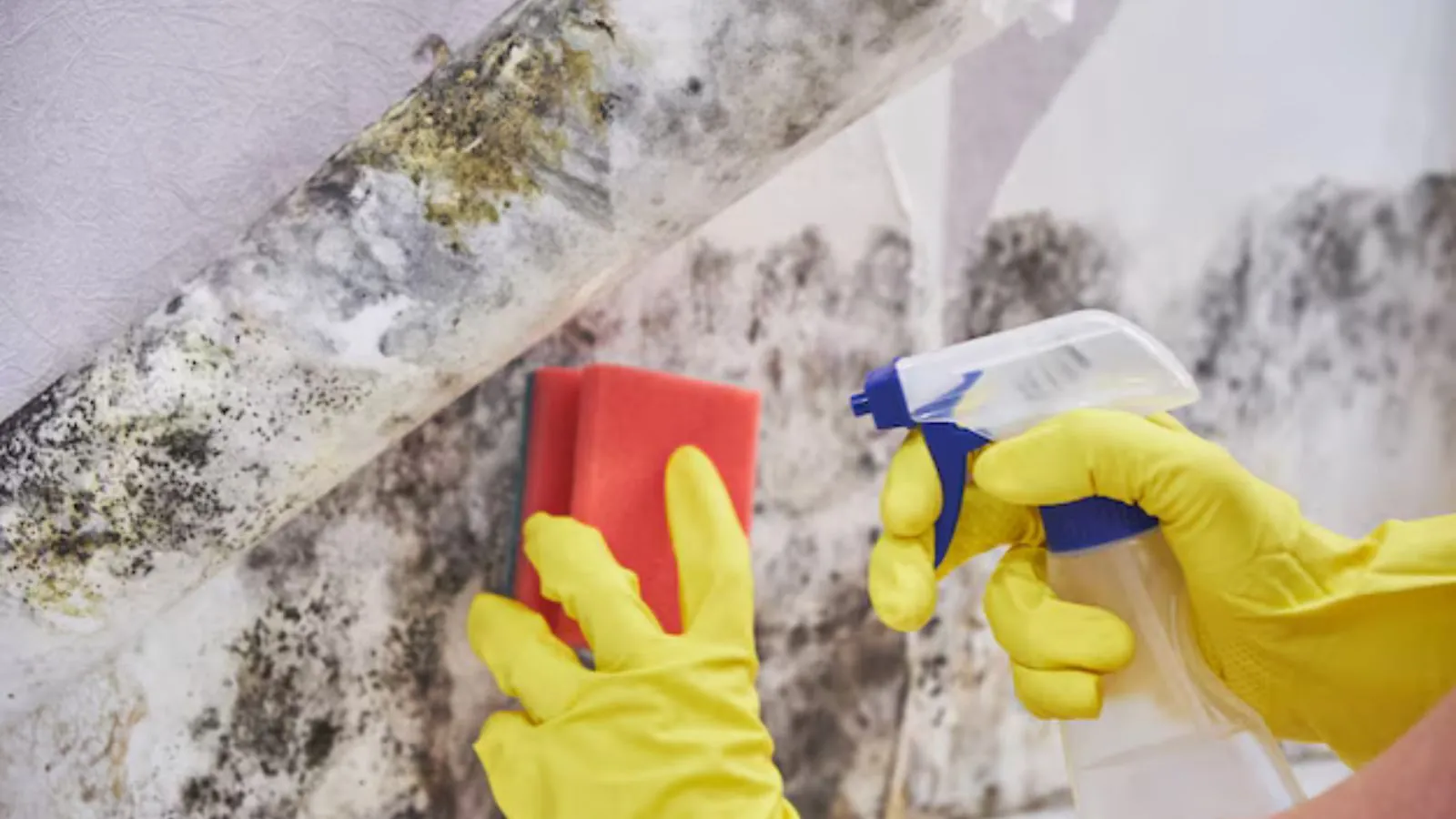
Mold in a basement almost always comes from moisture, not dirt. That is the main reason cleanup fails: someone scrubs the spot, paints over it and the damp returns. The U.S. Environmental Protection Agency says the key to mold control is moisture control, and that if mold is a problem, you should clean it up and fix the water problem. This guide follows that order.
It covers small patches on hard, non-porous surfaces such as concrete, tile or sealed shelving. Larger or hidden growth is a different job, and the last section explains when to stop.
Step 1: Find and stop the moisture
Look for the cause before you pick up a brush. Common sources are a leaking pipe, a damp foundation wall, a dryer vent that exhausts into the room, a window well that collects water and high humidity in summer. A basic humidity meter shows whether the air stays above the range you want. Fixing the cause is what keeps the mold from coming back.
Step 2: Decide whether this is a small-area job
EPA guidance generally treats areas of less than about 10 square feet as ones a homeowner may be able to handle. Larger areas, growth inside walls, a musty smell with no visible source, or any contact with sewage or flood water call for a professional assessment.
People with health concerns, including anyone who is sensitive to mold, should not do the cleanup and should talk to a doctor about their own situation.
Step 3: Protect yourself and contain the area
- Wear an N95 respirator, gloves and goggles without ventilation holes.
- Close the door to the area and keep the basement HVAC from blowing across it.
- Open a window or run a fan that exhausts outdoors, if the weather allows.
- Keep children and pets out until the work is done and the area is dry.
Step 4: Clean hard surfaces
Scrub non-porous surfaces with detergent and water, then rinse and dry completely. The EPA does not recommend relying on a biocide alone, and bleach is not required. Never mix bleach with ammonia or other cleaners, since the fumes are dangerous.
Porous materials such as ceiling tile, carpet and insulation that show growth are usually discarded rather than cleaned. Bag them before carrying them out so that spores are not spread.
| What you see | Usual approach | Call for help if |
|---|---|---|
| Small patch on concrete or tile | Detergent scrub, rinse, dry | It returns within weeks |
| Spots on a painted wall | Check for moisture behind it | The wall is damp or soft |
| Growth on drywall or insulation | Remove the material | It covers a large area |
| Musty smell, nothing visible | Look for moisture sources | The smell persists after drying |
Step 5: Dry it and keep it dry
Dry the area fully with fans and a dehumidifier, and keep indoor humidity under control. Check the spot again over the next few weeks. If damp returns, the source is not fixed. Structural drying explains how professionals measure dryness, and the mold remediation page explains what a larger job involves.
Common mistakes when cleaning basement mold
The most common mistake is cleaning without finding the water source, so the patch returns. The next is dry-brushing or sweeping mold, which can stir spores into the air. A third is mixing cleaners, which can produce dangerous fumes. A fourth is covering the area with paint or a sealant while the wall is still damp.
If any of these has already happened, stop, let the area dry and reassess. A moisture reading shows whether the surface is truly dry before you decide the next step.
Disposal and cleanup of supplies
Bag removed material and rags in plastic before moving them through the house. Wash clothes you wore separately, and wipe the respirator and goggles when finished. Vacuum the area only with a HEPA vacuum, since an ordinary vacuum can blow fine particles back into the room.
Iselin, NJ: what local sources say
Iselin drains to the northeast along the South Branch of the Rahway River, and Woodbridge Township's floodplain documents describe river flooding in the Colonia and Iselin sections, including Hurricane Irene in August 2011. A basement that took on water in a flood is a different case from a damp corner, because flood water is contaminated and porous materials that touched it are usually removed rather than cleaned.
The 2020 census counted 6,994 housing units in Iselin, many of them multi-unit buildings. If your basement is a shared space in a condo or townhouse, tell the association before you start, since the moisture source may be common property. Source types used here are township floodplain documents and census data.
Growth bigger than a few feet or inside a wall? Call for an assessment.
Call (833) 521-1033When to stop and call
Stop if the growth is large, if it keeps returning, if it is inside a wall or under flooring, or if the area got wet from sewage or flood water. A crew sets up containment, removes affected materials and dries the space. In Woodbridge and Fords the process is the same as in Iselin.
Standards and sources
The water categories and drying terms on this page come from the ANSI/IICRC S500 standard for professional water damage restoration. Insurance and flood guidance comes from the New Jersey Department of Banking and Insurance and the FEMA Flood Map Service Center, and local flooding facts come from Woodbridge Township's floodplain documents.
Questions homeowners ask
Can I remove basement mold with bleach?
It is not required. The EPA generally advises cleaning hard surfaces with detergent and water, and fixing the moisture, rather than relying on a biocide.
How big is a small area?
EPA guidance generally points to about 10 square feet or less as something a homeowner may handle. Hidden or larger growth needs an assessment.
Will painting over mold work?
No. Paint over a damp surface traps moisture and the growth can return. Clean, dry and fix the source first.
Does my Iselin condo basement need the association involved?
If the moisture may come from a shared wall, a common pipe or exterior drainage, tell the association before you start.
How do I know the basement is dry?
A moisture meter reading on the wall and floor, plus stable humidity, shows it better than touch or smell.