
Most advice on basement mold jumps straight to a cleaning recipe. A better first step is deciding which kind of problem you have, because the cleaning recipe only helps one of them. A small patch on a hard surface, growth behind a wall and a basement that flooded are three different situations with three different answers.
This guide is built as a decision path. It does not replace the step-by-step cleaning guide, and it does not give health advice. It helps you choose between doing it yourself, getting documentation first and calling a crew.
Question 1: Where did the water come from?
Mold needs moisture, so the source matters more than the patch. A one-time clean leak that was dried quickly is a different case from a recurring damp wall. If the water was flood water or sewage, skip the DIY route entirely, since porous materials that touched it are generally removed. Fix the source, whatever you choose.
Question 2: How big is it, and what is it growing on?
EPA guidance generally treats about 10 square feet or less as a size a homeowner may handle, on hard surfaces. Growth on drywall, insulation, carpet or inside a wall is different, because porous materials are usually removed. If you cannot see the extent of it, a moisture assessment is the way to find out.
Question 3: Does anyone need documentation?
If a buyer, lender, landlord or insurer wants a report, the usual route is an independent assessor who is separate from the company doing the work. The EPA says that testing is usually not needed to decide what to do about visible mold, so testing is for documentation rather than for deciding whether to clean.
| Your situation | Usual route | Why |
|---|---|---|
| Small patch on concrete or tile, source fixed | Do it yourself with precautions | Hard surface, small area |
| Larger area or growth on drywall | Call a crew | Porous materials are usually removed |
| Basement flooded or sewage entered | Call a crew | Contaminated water, containment needed |
| Sale or loan needs a report | Independent assessor, then crew if needed | Third-party documentation |
| Smell, nothing visible | Moisture assessment first | Find the source before cleaning |
If you do it yourself
Use an N95 respirator, gloves and goggles, keep the area closed off, scrub hard surfaces with detergent and water and dry them fully. Bag removed material before carrying it out. The full steps are in the companion guide on removing mold from a basement. Then keep humidity down with a dehumidifier and recheck for returning damp.
If you call a crew
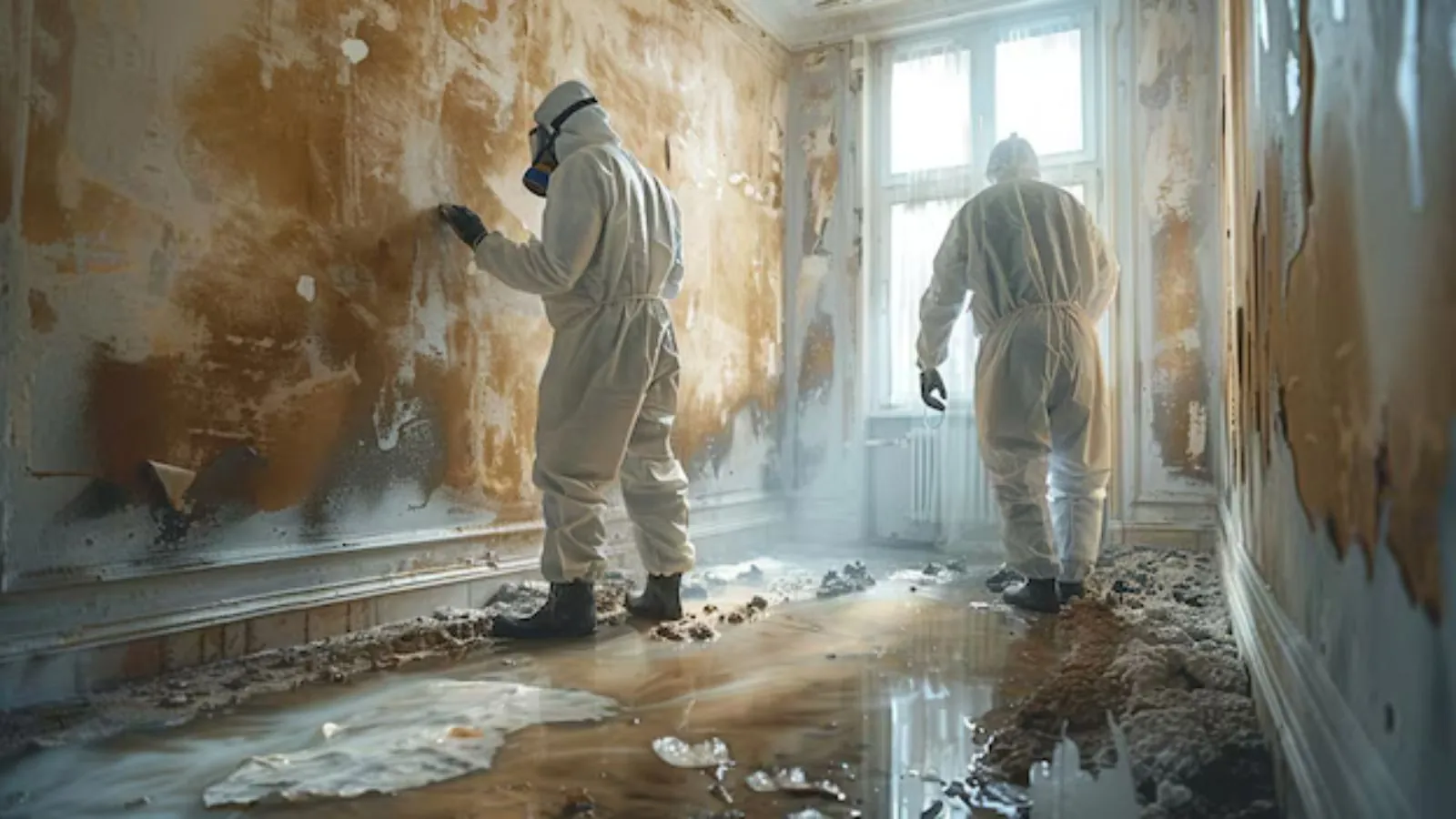
A crew assesses moisture, sets up containment, removes affected material, cleans and dries the structure and records readings. It should explain the scope before work starts. The mold remediation page describes the work, and structural drying describes how dryness is measured.
A short checklist before you buy supplies
- Write down where the water came from and whether it is fixed.
- Measure the visible area roughly in square feet.
- Note the materials involved, hard or porous.
- Check whether anyone in the home has health concerns and ask a doctor.
- Ask whether a buyer, lender or landlord needs documentation.
If three or more of these points toward a larger or hidden problem, the decision is usually to call for an assessment rather than start with a scrub brush.
What an assessment should tell you
A useful assessment states where the moisture is, how far it reaches, which materials are affected and what the scope of removal and drying would be. It should come with moisture readings, not just a visual opinion. If a company recommends work without measuring, ask how it determined the scope.
Iselin, NJ: what local sources say
The township's floodplain documents describe river flooding in the Colonia and Iselin sections along the South Branch of the Rahway River, including Hurricane Irene in August 2011. If your basement is in a low area that has taken water before, plan for drying and humidity control as part of any mold plan.
The 2020 census counted 20,088 people and 6,994 housing units in Iselin, and the area includes many townhouses and condominium buildings. In a shared building, check with the association about who owns the wall, the pipe or the drain involved. Source types used here are township floodplain documents and census data.
Not sure which route fits? Call and describe the area and the source.
Call (833) 521-1033Keeping it from coming back
- Keep indoor humidity under control, especially in summer.
- Fix leaks promptly and dry any wet materials within a day or two.
- Direct downspouts and grading away from the foundation.
- Vent dryers and bathrooms to the outside.
- Check lower walls and corners after heavy rain.
Crews also serve Fords and Metuchen with the same assessments.
Standards and sources
The water categories and drying terms on this page come from the ANSI/IICRC S500 standard for professional water damage restoration. Insurance and flood guidance comes from the New Jersey Department of Banking and Insurance and the FEMA Flood Map Service Center, and local flooding facts come from Woodbridge Township's floodplain documents.
Questions homeowners ask
Does doing it myself cost less?
For a small hard-surface patch with the source fixed, it can be. If you have to redo it because moisture returned, it is not, so fix the cause first.
Do I need a test before I hire a crew?
Not necessarily. The EPA says testing is usually not needed to decide what to do about visible mold. Testing can help if someone else needs documentation.
Should I use a dehumidifier?
It can help keep humidity down. It does not fix a leak, so find and stop the moisture source as well.
What if my Iselin townhouse shares the basement wall?
Tell the association and your neighbor, since the moisture may come from a shared source. Document it with photos.
When is a basement too wet for DIY?
If flood water or sewage entered, or the damage covers a large area, call a crew.