
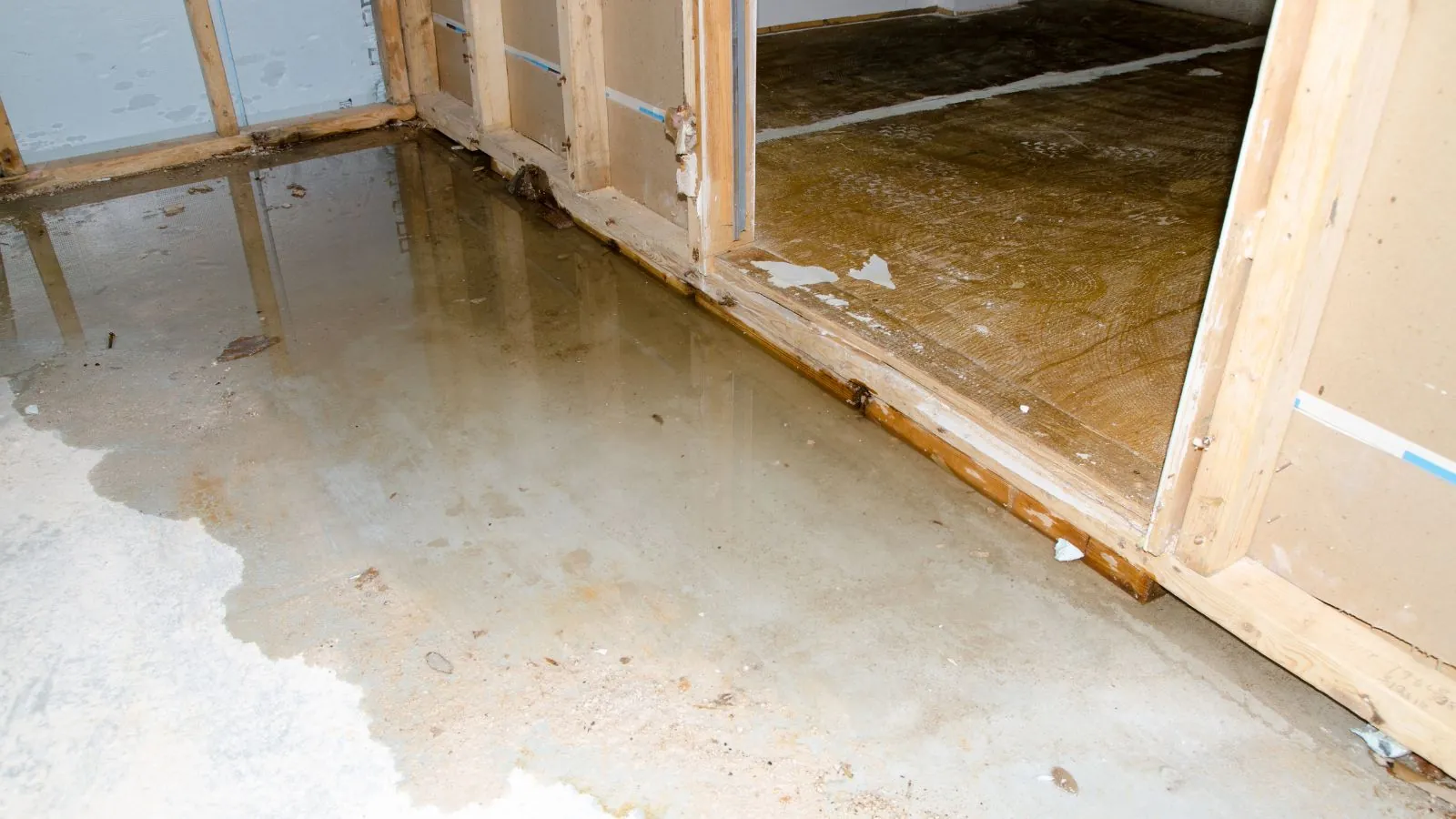
A hidden leak announces itself quietly. A water bill creeps up, a corner of drywall feels soft, a room smells stale or the sound of water runs when nothing is on. By the time a stain appears, the water may have been moving for weeks.
This guide walks through simple checks, from the water meter to the toilet tank, and explains where the do-it-yourself part ends. Finding and repairing a leak is plumbing work, and drying what it wet is restoration work.
What to do when you find a wet area
- Shut off the water supply if you see active water.
- Do not cut into walls or drill into a slab yourself.
- Stay clear of wet outlets and appliances.
- Photograph the area and note the meter reading and the time.
Check 1: The meter test
Turn off every fixture and appliance that uses water, then look at your water meter. If the dial or low-flow indicator moves with everything off, water is going somewhere. Note the reading, wait an hour without using any water and read it again. A change points to a leak between the meter and the fixtures. If your utility reads the meter remotely, ask it how to check.
Check 2: Fixtures and toilets
A toilet that runs on and off, or leaks silently into the bowl, can waste a lot of water. Add a few drops of food coloring to the tank and wait fifteen minutes without flushing. If color shows in the bowl, the flapper is leaking. Check under sinks, behind the toilet and around the tub for damp cabinet floors, soft flooring and mineral stains.
Check 3: Look and listen
- A hissing or running sound when all water is off.
- A damp, musty smell in a closet, cabinet or room.
- Warm spots on the floor, which can suggest a hot water line leak.
- Paint that bubbles or peels without an obvious cause.
- Stains that appear on ceilings below bathrooms or kitchens.
- Cracked, lifted or stained flooring along a wall.
| Sign | Common source | Who to call |
|---|---|---|
| Meter moves with everything off | Supply line, outdoor line, fixture | Licensed plumber to locate |
| Toilet runs by itself | Flapper or fill valve | Plumber or homeowner repair |
| Damp cabinet under a sink | Supply line or trap | Plumber, then drying |
| Stain below a bathroom | Tub, toilet or supply line | Plumber, then drying |
| Warm floor spot | Hot water line under the slab | Plumber, then drying |
Check 4: A moisture meter or thermal camera
A pin or pinless moisture meter reads moisture in drywall and wood, and a thermal camera shows cooler wet areas. A homeowner-grade meter can help narrow down a suspect wall, but it can also give false readings, so treat it as a clue. A restoration crew uses calibrated tools and compares against a dry reference to map the wet area.
If you find a wet area, photograph it and note the reading and the time.
Where the DIY part ends
You can do the meter test, the toilet test and a look under every sink. You should not cut into walls, drill into a slab or dig outside. A plumber locates and fixes the leak, often with acoustic or thermal tools. The wet materials then need drying, which is described on structural drying, and the line itself, if it burst, on burst pipe water damage.
Seasonal checks that catch leaks early
Twice a year, walk the house with a flashlight. Look under every sink, behind the toilets, around the water heater and washer hoses, and along the basement walls. Check the ceiling below each bathroom for new stains. Replace rubber washer hoses that are cracked or bulging, since braided hoses are less likely to split.
Outdoor and utility-side clues
A patch of lawn that stays green and soggy in dry weather, a sound of running water near the meter or pavement that stays wet can point to a leak on the outdoor line. If you see this, tell the utility or a plumber. Do not dig around the line yourself.
Iselin, NJ: what local sources say
Middlesex Water, which is headquartered in Iselin, lists Woodbridge Township and Metuchen as retail service areas. For a meter check, ask the utility how to read your meter and whether it can help you read it. If the leak is on the utility side of the meter, the utility needs to know.
The 2020 census counted 6,994 housing units in Iselin, including condominiums and townhouses with shared plumbing walls. If you live in one, a hidden leak may be in a common line, and the association or landlord should be told. Source types used here are the utility's service area page and census data.
Found a wet area? Call to map the moisture and dry it, and call a plumber for the source.
Call (833) 521-1033After the leak is found
Once the source is stopped, the first task is drying. Extraction removes any standing water, and drying brings walls and floors to dry readings. Keep the plumber's invoice and the drying log together, since they document the cause and the repair. Crews serving Woodbridge and Fords work the same way.
Standards and sources
The water categories and drying terms on this page come from the ANSI/IICRC S500 standard for professional water damage restoration. Insurance and flood guidance comes from the New Jersey Department of Banking and Insurance and the FEMA Flood Map Service Center, and local flooding facts come from Woodbridge Township's floodplain documents.
Questions homeowners ask
How do I know if I have a slab leak?
Warm floor spots, a running sound and a meter that moves with everything off are common signs. A plumber confirms with detection equipment.
Can a leak raise my water bill without any stain?
Yes. A hidden leak can run unseen, which is why the meter test is a good first check.
Should I shut off the main while I investigate?
If you see active water, yes. For a slow suspected leak, the meter test will tell you whether the water is moving.
Who do I call in Iselin if the leak is on the street side of the meter?
Call the water utility. Middlesex Water lists Woodbridge Township as a retail service area, so confirm yours and report it.
Do I need both a plumber and a restoration crew?
Usually, yes. The plumber stops the leak, and the crew dries and documents the damage.