
People want a number, and the honest number is a range. Many jobs take several days from the start of drying to dry readings, and some take longer, especially when dense materials like concrete or thick hardwood are involved. What matters more than the number is what controls it and how the end point is measured.
This guide explains the factors, shows how dryness is confirmed and gives you questions to ask so you are not told it is done because the room feels dry.
What to do while drying is under way
- Do not turn equipment off before the crew takes readings.
- Do not use a space heater or open windows unless the crew advises it.
- Keep children and pets away from cords and equipment.
- Tell the crew about new stains or smells.
What controls drying time
Water category
Clean water allows more materials to be dried in place. Contaminated water means removal, which changes the whole schedule.
Material type
Drywall dries faster than hardwood or concrete. Dense and thick materials release water slowly.
How long it was wet
Materials wet for days hold more water and are harder to dry than ones caught early.
Air conditions
Warm, dry air dries faster. Dehumidifiers matter when indoor air is humid.
How the process works
After extraction, air movers push air across wet surfaces and low-grain refrigerant dehumidifiers remove the water that evaporates into the air. The goal is to bring each material back to a dry standard, which is set by comparing against a dry reference reading from the same type of material in an unaffected area of the building.
The crew returns on a schedule to take readings and adjust equipment. As areas reach the target, equipment is removed, so the number of days of equipment use is the real measure of the job.
| Material | How it tends to dry | What slows it |
|---|---|---|
| Drywall | Often a few days if dried in place | Wet insulation inside the wall |
| Wood subfloor and framing | Several days with airflow | Thickness and trapped moisture |
| Hardwood flooring | Days to a couple of weeks | Drying too fast can crack the wood |
| Concrete slab | Can take longer than other materials | Thickness and moisture beneath it |
| Insulation | Often removed rather than dried | It holds water and sags |
How you know it is dry
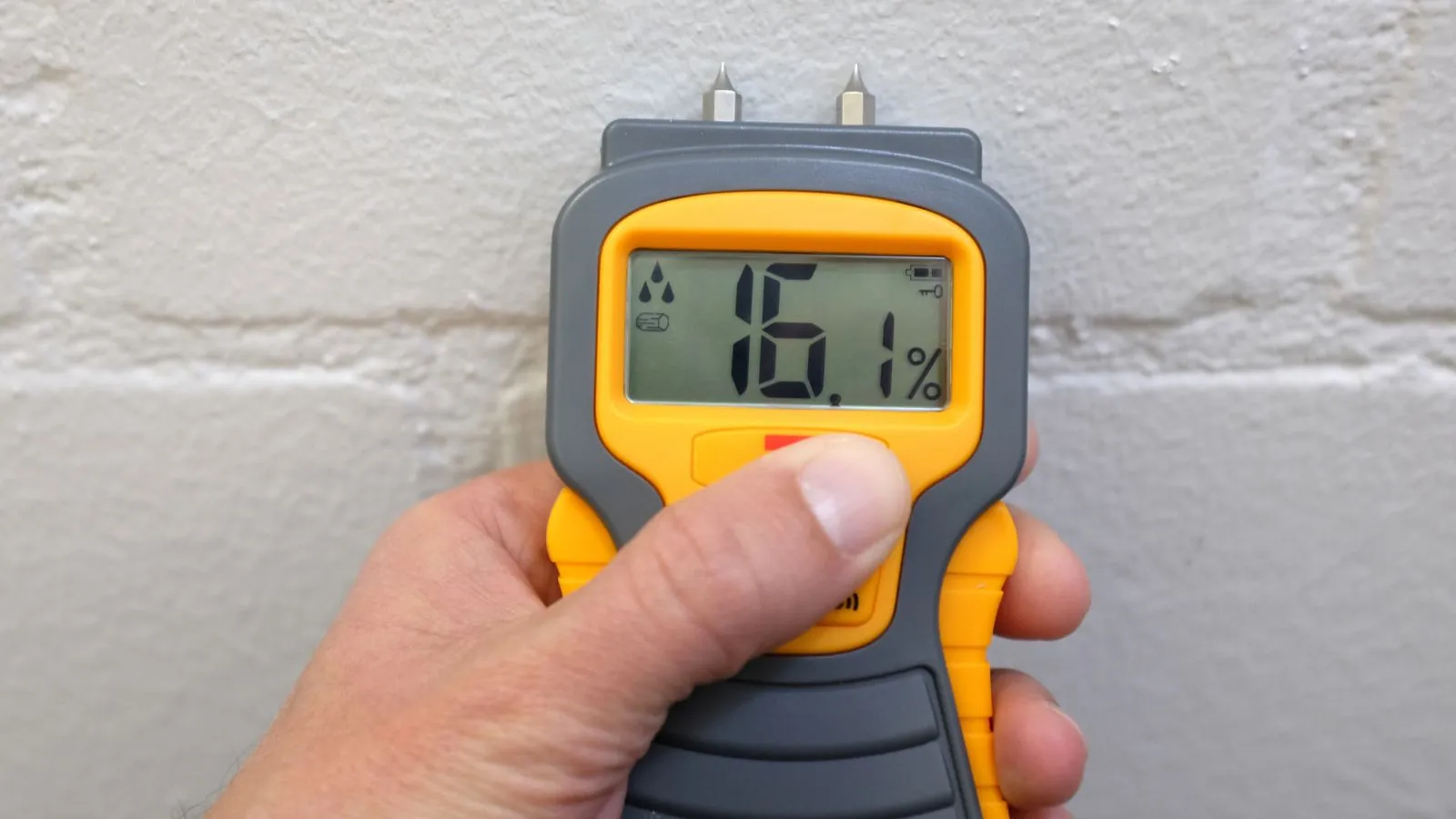
Touch is a poor test. Dry to the hand can still be wet inside. A moisture meter and thermal camera show the reading, and a log records each visit. Ask for the readings of the wettest spot, the dry reference reading and the date the target was reached. If a company will not show readings, treat the answer as unconfirmed.
Things that make it take longer
- Hidden moisture inside walls, under flooring or above ceilings.
- Opening doors and windows during drying in humid weather.
- Turning equipment off to save noise or power before readings are dry.
- Delaying the start, which lets water spread and soak in.
- Ongoing leaks that were never fully stopped.
A realistic timeline from start to finish
Day one is extraction, setup and the first set of readings. The next few days are monitoring, when the crew checks readings, moves equipment and opens areas that stay wet. The last day is the final reading, after which equipment is removed and rebuilding can begin. Rebuilding is a separate timeline and depends on what was removed.
Jobs with contaminated water often have an added stage of removal and cleaning before drying begins, so the sequence can start later even when the equipment time is similar.
Questions to ask the crew about drying
- What is the dry reference reading for each material?
- How many equipment units are running and where?
- When will you take the next reading?
- What will tell you the job is done?
- Will I get the drying log in writing?
Iselin, NJ: what local sources say
Iselin drains northeast along the South Branch of the Rahway River, and Woodbridge Township's floodplain documents describe river flooding in the Colonia and Iselin sections, with flooding from Hurricane Irene in August 2011 and tidal flooding from Sandy in October 2012 across the township. After flooding, structures often hold water in several layers, which is why drying is measured rather than estimated.
Middlesex Water, headquartered in Iselin, supplies Woodbridge Township at retail. A supply line failure is a clean water event, and that kind of loss is usually the quickest to dry. Source types used here are township floodplain documents and the utility's service area page.
Want readings after a leak? Call and a crew can map moisture in the room.
Call (833) 521-1033What you can do to help drying
Leave equipment running, keep doors and windows closed as the crew advises and keep the area clear. Move furniture off wet floors and do not turn the thermostat up as a shortcut. If something changes, such as a new stain or smell, tell the crew. The overall process is described under structural drying, and the first stage is on the water extraction page.
The same approach applies in Fords and Woodbridge.
Questions homeowners ask
How long does it take for a wet floor to dry?
It depends on the material and the water. Many jobs run several days, and dense materials take longer. Readings decide.
Can I speed it up with a space heater?
Heat alone can warp materials and does not remove moisture from the air. Dehumidifiers and airflow work better.
Why are the machines left for days?
Moisture inside materials takes time to come out. Equipment stays until readings reach the dry standard.
Does the Iselin area flood history change how long drying takes?
Not by itself. The water category, materials and how long they were wet drive it. Flood water is contaminated and often means removal of materials, which changes the schedule.
Is it dry when the room feels dry?
Not always. Meter readings show the real moisture level inside materials.