
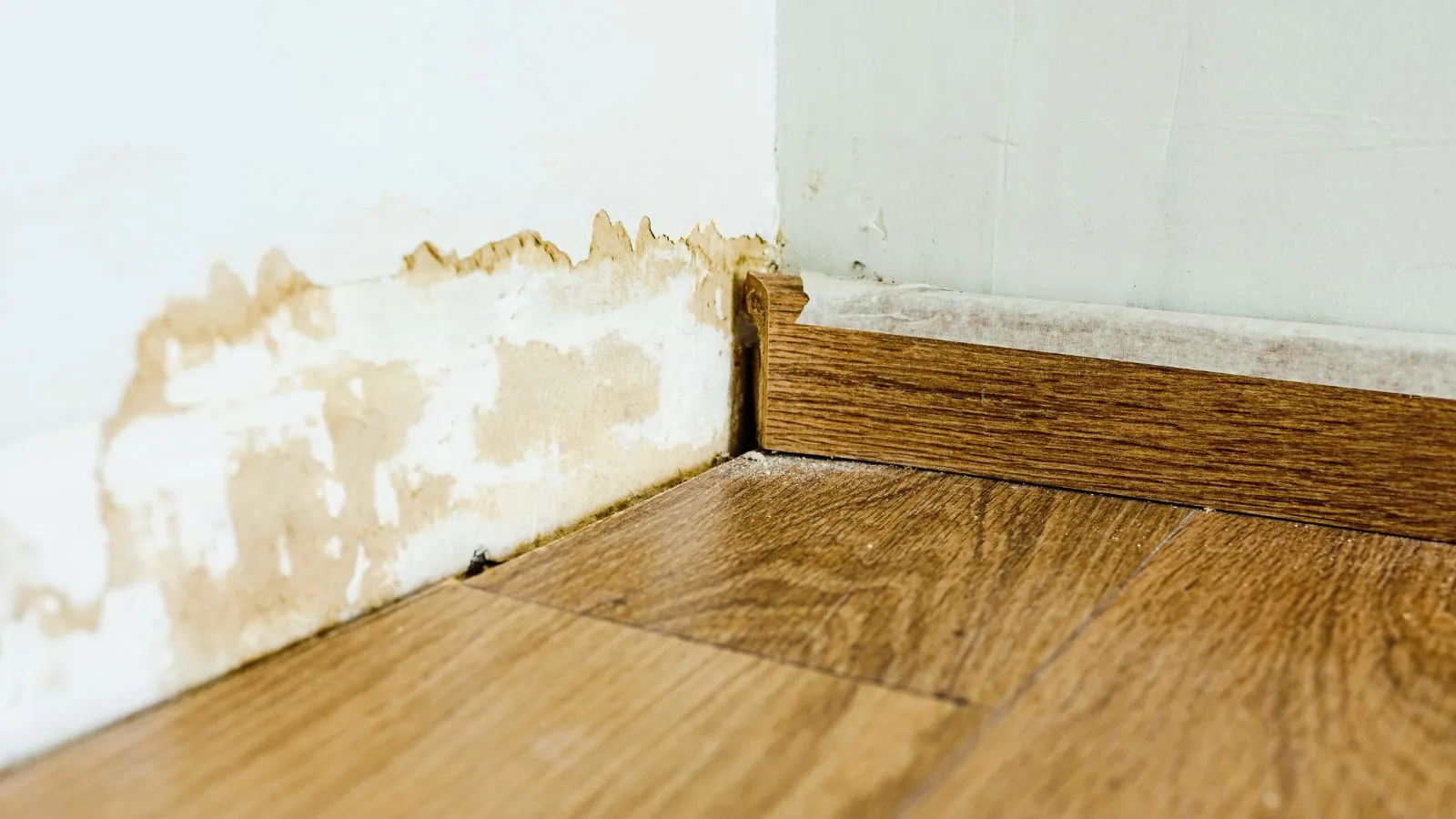
Most homeowners ask this question after the water is already on the floor, which is the worst time to read a policy for the first time. The short answer is that standard homeowners policies tend to cover water damage that is sudden and accidental, and tend to exclude flood, long-term seepage and damage from neglect. Your own policy decides, so the useful move is to know what to look for.
This guide explains the common pattern, the terms that trip people up and the records that help. It is general information, not a coverage opinion, and only your insurer can say how your policy applies to your loss.
What homeowners policies usually cover
The usual wording covers direct physical loss from a sudden and accidental event. A supply line that bursts, a water heater that fails overnight or a dishwasher hose that splits are typical examples. The policy may pay for the resulting damage to the structure, such as drywall, flooring and ceilings, and in many cases to your belongings.
Coverage for the broken pipe or appliance itself is a different question, and many policies do not cover the cost of repairing the item that failed. The water damage it caused and the failed part are often treated separately.
What policies usually exclude
Exclusions are where most disputes start. Flood is the big one. Standard policies commonly exclude water that rises from the ground, a river, a storm surge or surface runoff, and that risk is covered by a separate flood policy. Long-term leaks, seepage and rot are often excluded because they are treated as maintenance problems rather than sudden events.
Sewer and drain backup is another common gap. Many insurers sell it as an optional endorsement, so a policy without it may not respond when a drain pushes water into the basement. Look for the words water backup, sump pump overflow or sewer backup on the declarations page.
| Cause of the water | How policies commonly treat it | What to ask your insurer |
|---|---|---|
| Sudden pipe or hose failure | Often covered for the resulting damage | Is the failed part covered, and what is the deductible? |
| Appliance or water heater failure | Often covered for resulting damage | Is there a wear and tear or age exclusion? |
| Slow leak over weeks or months | Often excluded as seepage or neglect | How does the policy define sudden? |
| River, stream or surface flooding | Commonly excluded, separate flood policy needed | Do I have flood coverage and when did it start? |
| Sewer or drain backup | Often needs an endorsement | Is water backup coverage on my policy? |
| Roof or window opening from a storm | Often covered when the storm created the opening | Is there a separate wind or hail deductible? |
Terms worth reading in your own policy
Start with the declarations page, which lists the coverages and the deductible. Then find the section on water damage and the list of exclusions. Three phrases matter most. Sudden and accidental describes the kind of event that is covered. Continuous or repeated seepage describes the kind that often is not. Ensuing loss describes damage that follows an excluded event, and policies differ on how they treat it.
If the wording is unclear, ask your agent to explain it in writing before you file. A phone call that is not recorded is hard to rely on later.
Records that help whatever the answer is
- Dated photos and video of the source, the water and the damaged rooms before anything is moved.
- Moisture readings and a drying log from the restoration crew, which show how far the water reached.
- An itemized scope of the work and receipts for anything you pay for, including emergency repairs.
- A list of damaged belongings with approximate age and value, plus photos of each.
- The failed part, if you can keep it, since it can show whether the failure was sudden.
Iselin, NJ: what local sources say
Iselin is an unincorporated community in Woodbridge Township, Middlesex County, and the township's own floodplain management documents describe river flooding in the Colonia and Iselin sections along the South Branch of the Rahway River. They also record flooding from Hurricane Irene in August 2011. That history is a reason to find out whether your policy has any flood coverage at all, since a standard policy usually has none.
The New Jersey Department of Banking and Insurance advises homeowners that flood is not covered by a standard homeowners policy, to take photographs, to keep receipts and to report a loss promptly. The Department also runs a consumer hotline at 609-292-7272. Source types used here are township floodplain documents and state insurance regulator guidance.
What to do first, before the coverage answer arrives
Do not wait for a coverage decision to start drying. Water left in a structure keeps damaging it, and insurers generally expect you to take reasonable steps to limit further loss. Stop the source if it is safe, photograph the damage and call a restoration crew. A crew can begin water extraction and drying while you talk to your insurer.
Notify the insurer promptly, ask what documentation it wants and keep a log of every call with the date and the name of the person you spoke with.
Water in the house now? Call the 24/7 line and start drying while you sort out the claim.
Call (833) 521-1033Where the crew can help with the claim record
A restoration crew cannot decide coverage, and it does not negotiate with your insurer. What it can provide is the record: photos, moisture readings, equipment logs and an itemized scope. That material helps you and the adjuster talk about the same facts. Crews serving Woodbridge and Metuchen work the same way as in Iselin, and the drying process is described on structural drying.
Questions homeowners ask
Is water damage from a burst pipe covered by homeowners insurance?
Often for the resulting damage, since a burst pipe is sudden and accidental. The pipe itself may not be covered, so ask your insurer how your policy treats both.
Will insurance cover a basement flood?
Standard policies commonly exclude flood. A separate flood policy or a water backup endorsement may apply, depending on how the water entered.
What if the leak went on for weeks before I noticed?
Policies often exclude long-term seepage. Some cover it if it was hidden, so read the wording and ask your insurer.
Does the Iselin and Woodbridge Township flood history mean I need a flood policy?
It means flooding has happened nearby. Whether you need coverage depends on your address, so check the FEMA Flood Map Service Center and ask your insurer or agent. Flood policies often have a waiting period before they start.
Should I start cleanup before the adjuster visits?
Photograph first, then start drying. Keep removed materials or photos of them if the adjuster asks, and ask your insurer what it needs.